
Back when shaped skis were emerging as a powerful, but not yet all-conquering force in ski design, I was invited by Fischer to visit their factory and essay some new skis on the Sölden glacier. My residual impressions of that trip have faded over the intervening decades, but two still reverberate over the chasm of time: making a ski with a wider dimension at the tail than at the tip wasn’t the best idea to issue from this new generation of skis, and damn, Fischer’s production methods and quality control are first rate.
These two impressions have withstood the warp of time, but while skis wider at the tail than the tip have gone the way of the dodo, Fischer quality remains a constant. Consistency in ski manufacturing is something most skiers take for granted, but for much of the 20th century making 1,000 identical pairs of skis was a quest more than a reality. Fischer was an innovator in developing processes that helped realize the elusive goal of consistency. Remember the term “Vacuum Technic” that was emblazoned on a generation of Fischer models? It was a means of ensuring glue was evenly distributed throughout the ski mold, a major step in assuring a consistent product.
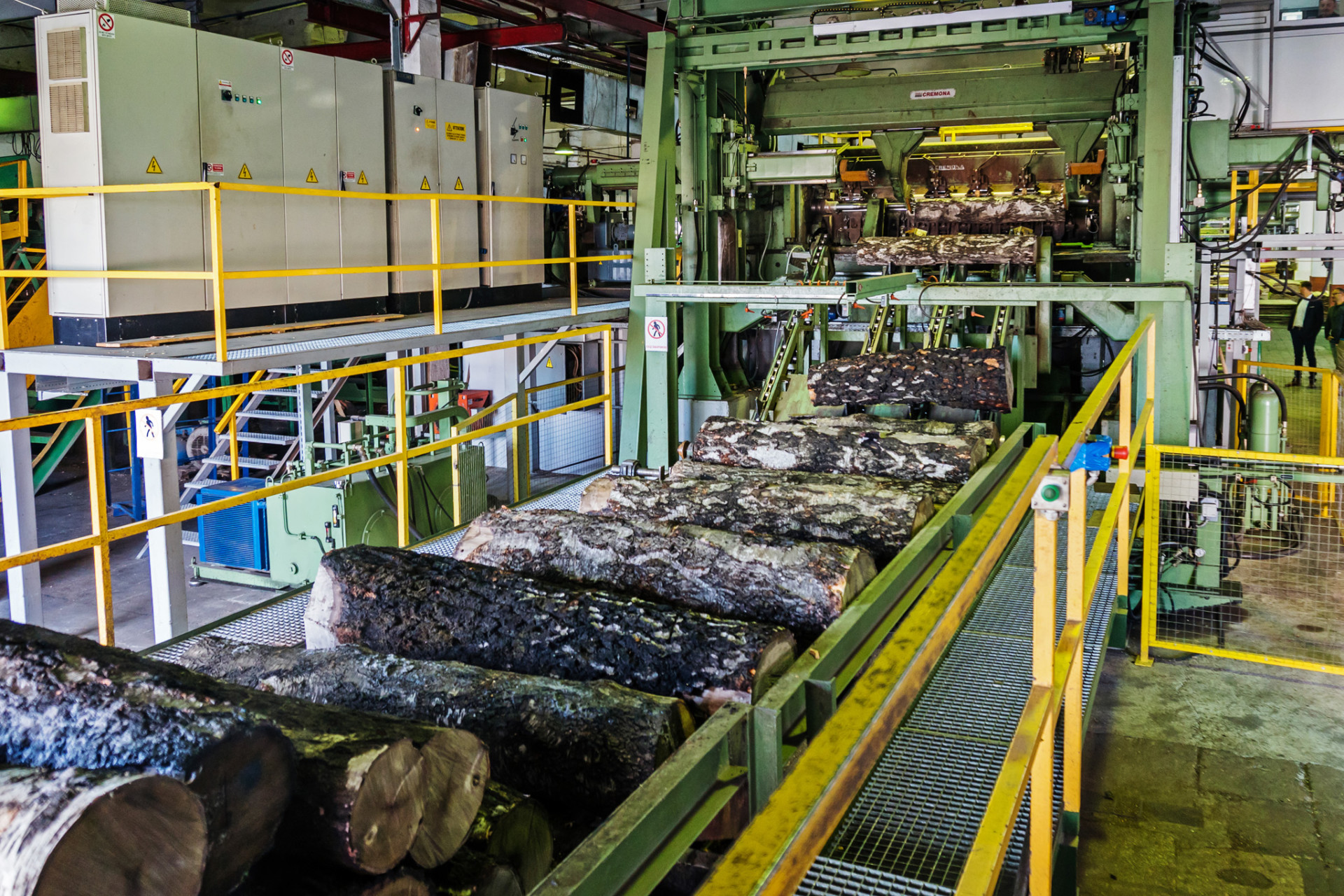
At Fischer’s Ukraine plant, logs enter the pipeline on one end…
Followers of World Cup racing are used to seeing Austrian athletes standing on a victory podium, but the skis cradled in their arms tend to Head or Atomic. Fifty years ago, that role was played by Fischer. When Franz Klammer electrified Olympic viewers in 1976 with a balls-to-the-wall dash down Innsbruck to overtake Bernard Russi to win perhaps the most famous DH run of all time, he was riding Fischer RC4’s. The Crazy Canucks of the same era were likewise on Fischers, even though they suspected the fastest pairs were reserved for native sons of Austria. At the time, it seemed every first seed downhiller was either on Fischer or wishing they were.
The fortunes of race programs and commercial enterprises seem to run in cycles, and while Fischer-sponsored athletes continue to compete in all alpine World Cup events, this is no longer the arena where Fischer’s star shines brightest. Given the current state of affairs, it might surprise you to learn that Fischer wins more winter Olympic medals than any other ski brand. How is this possible? Two words: Nordic events.
Perfect cores issue from the other end.
Fischer dominates cross-country and biathlon races and has for decades. They also own a great deal of the Nordic market, but as most Americans are as interested in XC racing as they are in curling, even sustained success in both XC racing and the XC consumer market hasn’t made an impression on alpine skiers.
Which is a pity, because the technicity that Fischer brings to industrializing the artisanship required to build a great ski is above reproach. Far from resting on their bed of laurels earned in the Nordic arena, Fischer has applied what it’s learned from making featherweight XC skis to alpine models. In the new era when all that is lighter is deemed better, the market is moving directly into Fischer’s wheelhouse. Its engineers are past masters at using a minimum of material to create a strong structure. The Air Tec Ti core used to keep their off-piste Ranger models light and easy to maneuver is a technology nicked from its XC designs.
If Fischer has an enduring identity in the alpine sector, it’s as a purveyor of race and technical skis, domains in which they have always excelled. Several seasons ago Fischer struck a chord with on-piste experts with their Progressor series, but the Technical genre was too weak to serve as a platform for brand revival. The current Curv models are like Progressors on steroids, delivering FIS-caliber performance in more user-friendly shapes. If you love the feel of a secure, tip-to-tail edge slicing through hard snow at high speed, you owe yourself a ride on a Curv.
So skiers can do what they love without worrying about ski quality.
If all this still leaves you lukewarm about Fischer, consider a few other points in its favor. The brand was an early adopter of the need to expand production into Eastern Europe, opening a factory in Ukraine that can turn a tree trunk into an exquisitely milled core with minimal human intervention. When Fischer applied their knowledge of vacuum tech to alpine boots, their sales surged as dealers rushed to exploit the first boot fitting method that could shrink the shell around the foot. And the company founded by Josef Fischer is still family owned, a detail that ought to resonate in an industry that has recently seen how fickle corporate ownership can be.
Other than the tepid observation that brands have ups and downs, what can explain why Fischer has been a marginalized brand in the U.S. alpine scene? Part of the explanation can be that Fischer failed to convince buyers that they had a grip on the freeride category when the market swung decisively to fat skis. Their strengths were cornered in genres that were market weaknesses. (Meanwhile Blizzard, which had once sunk to the depths of U.S. market share, rode their brilliant freeride models upwards in a remarkable brand makeover Fischer would dearly love to emulate.)
Maybe the explanation is as simple as instability in U.S. leadership and a tendency to choose cosmetics only a mother could love, a frailty certainly not unique to Fischer. As is often the case with translated brochure copy, their messaging can come across as stilted or out of place, like a 30-year old trying to fit in at a frat party. These shouldn’t be hanging offenses, but mere misdemeanors.
As we move into the core weeks of the season when both consumers and the ski trade take to the slopes to try new skis, I encourage my faithful readers to give a pair of Fischers a chance to surprise you. The next time you’re looking for something new and sexy, try a model from the last family-owned major brand that helped to build skiing from a rustic form of winter travel into the diverse, technical sport we know and love today.
Note: Realskiers veterans maybe wondering, where is my coverage of all that is new for 2018 as displayed at the annual ski show? Patience, dear readers. This week those same products go on-snow, a far more valid exercise than wandering show aisles for assessing what’s new. Stay tuned to this channel.