This isn’t the typical season-opening salvo from Realskiers.com that my Dear Readers and Dear Listeners have come to...
The Reckoning to Come
read more

This isn’t the typical season-opening salvo from Realskiers.com that my Dear Readers and Dear Listeners have come to...
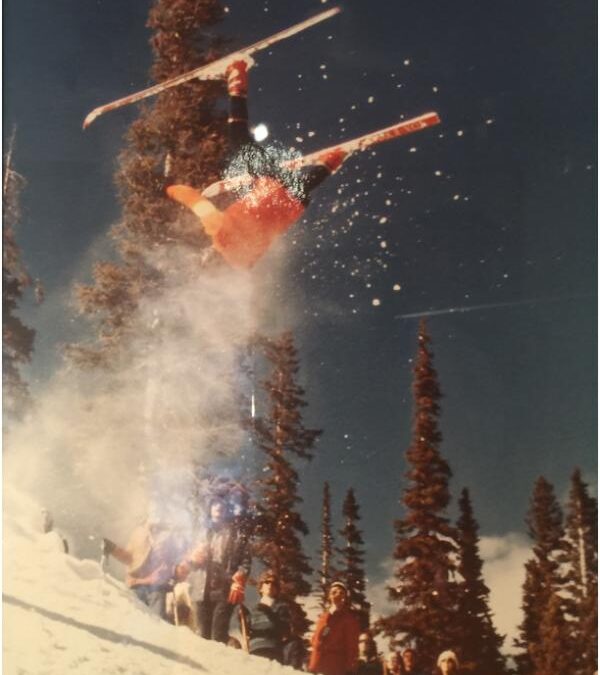
As we grow older, events of the misty past take on a warm, pastel glow that suffuses our memories with a charm that...
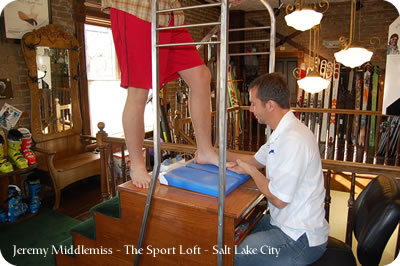
Why You Should Buy From People Who Know What They’re Doing And Have Your Best Interests at Heart Everyone wants a...
This subject has been percolating in the subterranean strata of my noggin for several months, searching for the connections that will lend it substance. The search for this topic’s handles has a wedding-cake’s worth layers: to depict the wandering mind requires its engagement, a self-cancelling concept that would oblige me to catch and release the idea in a Sisyphean quest to define its merits.
The notion of expounding on this Möbius strip of an idea was, naturally, an example of the wandering mind in action. I might have been noodling on a question several of my Dear Readers have posed, which can be distilled to, how did I ever learn to write in the manner that I do?
To find my answer, I had to relax my grip on the subject. My reasoning self was ready with mechanical answers, such as the discipline of writing every day. Duly noted, but insufficient. Let’s wander a little further.
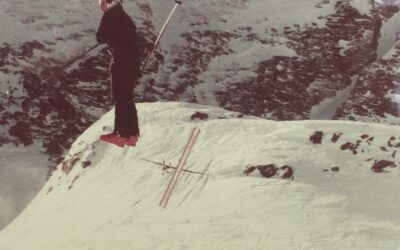
If you’ve been a lifelong skier, you’ve not only experienced failure; most likely you’ve survived at least one miscalculation so soul-scarring, its time capsule is enshrined in the halls of memory alongside weddings and funerals.
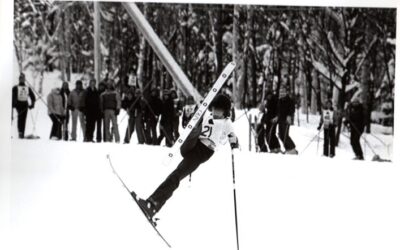
As inspiration and prod to memory, allow me to recount a vignette from my days as a freestyle competitor. The location is Keystone, Colorado, the event, The Chicken of the Sea Freestyle Classic, a sponsorship coup that couldn’t have been too tough to land as Ralston Purina owned both the resort and the tuna.
I qualified via a preliminary aerial competition, taking a conservative tack by throwing a mule kick, hardly daring when going upside down was common. But my modest move was clean and hung out to dry, with a barely discernible, weightless pause at its apex.
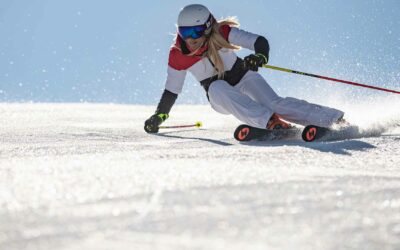
Before getting down to the business of picking favorites, let’s re-examine the fundamental question, what makes a ski a women’s ski?
Not to be flippant, but any ski its maker markets as a women’s model qualifies in that it will come in shorter lengths, which are scaled to match smaller people, a considerable percentage of which are women. To drive this point home, the women’s models will also be decorated in themes deemed – however correctly – to be more appealing to women.
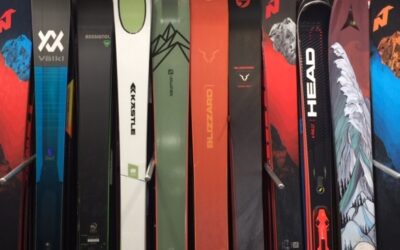
I’m of two minds when it comes to the “best of” business. I realize that many consumers appreciate this shortcut to any further research, take the gold medal as Gospel and act on it. From the designer’s perspective, even though I might make dozens of prototypes, I would still only manufacture one model. From where the ski review purveyor sits, for any given set of criteria, it stands to reason that the ski with highest aggregate score would be the best.
The other side of the coin is that there is no best ski, nor can there be. Within the key All-Mountain categories where most consumers correctly shop, the diversity of on-snow behaviors is astounding. It’s impossible for all these skis to register identically with all the skier types who might consider them. Since there is no one definition of “best,” it’s not possible to identify a single “best” ski for all skiers.
One of the most popular features on Realskiers.com’s member site is our Ski Review Archive, where Recommended ski reviews dating back to 2015 can be easily exhumed and examined. Longtime site subscribers know that this is only a partial collection, that in fact our review archive reaches back to the turn of the millennium.
We’ve been keeping these well-aged scrolls under wraps in part because, like actual ancient documents, the software they were written on (so to speak) has grown old and rickety. There are some serious downsides to continuing to operate obsolete platforms, but to a certain cadre of our readers their contents are as precious as holy relics.

Any serious attempt at bootfitting begins with an assessment of the customer’s feet and lower legs. This appraisal can be as superficial as measuring each foot for length or as detailed as a complete skier profile accompanied by a few basic biomechanical evaluations.
Better bootfitters gather further information from a litany of details that lie outside the scope of the usual foot-measuring device, such as a Brannock. The veteran bootfitter watches how the customer walks, sits and assumes a skiing position, for starters. The savvy fitter can even spot limb-length differences and redistribute pressure around the foot in places no measuring stick can quantify.
If this sounds like a pretty sophisticated skill set, well, it is. Yet many, if not most, prospective boot buyers approach the bootfitting exercise with the same enthusiasm they usually reserve for a root canal. Suspicions are often confirmed when the first boot proffered seems crazily short. Even the most knowledgeable fitter is obliged to re-establish his/her credibility just to move the bootfit process pass square one.
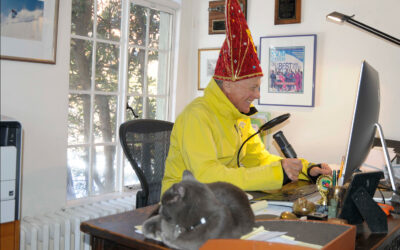
According to my tight-knit circle of advisors, idolaters, sycophants and astrologers, I was made for this medium.
Of course, any garden-variety sycophant will whisper words of inspirational twaddle, but the faint note of sincerity I detect in the smarm-storm of platitudes meant to buck me up has proven sufficient to spur me to action. I quickly acquired a very professional looking microphone and a pop filter to knock down my fierce sibilants. To preserve my objectivity, I opted not to take any lessons, follow any tutorials or otherwise prepare myself for this venture. By the powers vested in me as the Pontiff of Powder, I declare myself to be, now and forever after, a podcaster.
I’ll give you a moment to recover.

When Head humanely, if rather brusquely, terminated my tenure in 2001, the ski business in the U.S. was already facing stiff headwinds, a brewing storm that would turn into a full-on debacle when 9/11 disrupted all commerce. I became unemployed just in time for the job market to implode.
I don’t handle inactivity well. I started writing a very long, very dreadful novel, composed a handful of scripts for Warren Miller – and later, Jeremy Bloom – to recite and scribbled batches of brochure copy and white papers for industries as diverse as accounting software, instrumented football helmets that registered concussions and risk assessment based on location.
The pickings were slim, but they wouldn’t have amounted to anything at all were it not for a little help from my friends. Andy Bigford, who I’d worked with at Snow Country, hired me for the Warren Miller gig. A college chum kindly engaged me to write white papers on accounting fraud. But it was Dave Bertoni, an erstwhile colleague from Salomon days, who joined me in creating Desperate Measures: A Training Method for Selling Technical Products at Retail.