
I was one of the many midwives who attended at the birth of the Salomon boot in 1979. I translated Salomon’s encyclopedic Boot Bible into English and later condensed parts of it into one of the first bootfitting manuals. I trained the North American field force, holding them hostage at the Parker House in Boston for weeks on end until they were ready to storm the marketplace.
I mention this not merely due to my bottomless narcissism and sepia-toned nostalgia, but because I don’t want to disguise my history with the brand.
When I was a product manager at Salomon with responsibility for the North American zone, it was a very different ski marketplace and Salomon was a completely different company. It took Salomon several generations of non-rear-entry designs to eradicate the stigma associated with its convenient-entry roots. While Salomon continues to experiment with shell structures – witness Shift Pro and S/Lab MTN constructions – its bread-and-butter boots all evolved into variations on a 4-buckle overlap theme. (Note that the infiltration of BOA systems into the Alpine boot market has drastically cut into the “four-buckle” aspect of the two-piece shell market.)
Once Salomon accepted that its credibility depended on adopting the market’s de facto standard design, it re-fired the engines of innovation, a process that eventually led to Custom Fit. Originally just a heat-deformable panel on either side of the forefoot, Custom Fit evolved to encompass every aspect of the boot but the sole and spine. The process of molding the entire boot to the customer was slick, efficient and man, did it sell boots. At one time in our recent history, Salomon had the top 7 selling boots in the U.S. That’s ridiculous, and unsustainable. The next year, it only had the top five.
No one gets to own the world forever, but if Tecnica or Head or Nordica wants to be number one they’ll have to wrest the crown from Salomon as it isn’t about to surrender it voluntarily. Six years ago, the narrow-lasted X-Max collection was retired in favor of S/Max, with a familiar last but very new shell and cuff. The new shells were super lightweight and so close fitting they felt like they’d been painted on. The flagship S/Max Carbon was eerily lightweight yet dug trenches and rebounded like it was made of equal parts titanium and TNT.
The S/Max wasn’t just a tweaked X-Max. It was different. (The S/Race (92mm last) was also new in 2019, but let’s stay on point.) The mono-injected frame delivered the snow feel of the best race boots, and the closeness of the light shell made it feel even less like a foreign object and more like a second skin.
In 2020, Salomon applied the S/Max makeover machine to its wheelhouse, medium-width Pro series. S/Pro was a complete redesign, with a new last, new plastic and new shell/cuff structure. By mixing the elastomer that makes shell customization possible into the PU pellet, the new material more evenly distributed the two components. The net effect was the total heating time dropped to two minutes, with the same, near miraculous results.
But material and customization facility are only part of the story. The power in the new design came from an asymmetric stirrup of super-stiff material that ran up into the cuff and wrapped under the heel. Every shell size had its own specific left and right Coreframes, so all components meshed perfectly. The 100mm last was raised 2mm over the instep; if more room were required, the entire cuff was Custom Shell, i.e., expandable by up to 5mm around the ankle. The S/Pro liner was redesigned to move all seams away from critical fit zones.
Since the debut of Custom Fit, Salomon has depended on its ability to expand shell volume to handle wide feet. Finally, in 2021 it added a wide chassis, the S/Pro HV, to its Alpine fleet. All the features that make S/Pro work so well for medium-volume feet became available to those unfortunates with flippers for feet.
Not all brands – or veteran bootfitters – are fans of heat-molding shells. (BTW, everybody’s liners are heat-moldable, without exception.) Yet it’s hard for this observer and practitioner to see how the conscientious application of this technology is anything but beneficial. It won’t solve all boot-fit and/or stance problems, nor will it solve world hunger, but it sure solves any routine fit issues.
Salomon isn’t a core backcountry boot brand like Scarpa or Black Diamond so it has no inherent cachet with the BC crowd, but Salomon doesn’t enter a category to be average and does the necessary research to break fast from the gate. It was only a few seasons ago that Salomon got serious about backcountry with MTN Lab; now its S/Lab MTN models are industry benchmarks. For 2021, Salomon adapted its S/Pro last and shell design to the touring market, creating the Shift Pro AT collection. With GripWalk soles, tech inserts, Surelock hike mode and weighing only 1690g, it behaved like an AT boot going uphill and like an Alpine boot on descent.
Two years ago, Salomon continued its assault on the touring market with the S/Lab MTN Summit, conceived with environmental sustainability in mind. Along with two other flagship Alpine models – S/Pro Alpha 130 EL and Shift Pro 130 – the S/Lab MTN Summit comes in a unisex size range that begins at a genuine size 22.
For in-resort Alpine skiers, the focal innovation of 2023 was a new, low-volume series (of X-Max lineage), the S/Pro Alpha line. The 98mm-lasted shell remained a four-buckle overlap design, but its walls were thinner, particularly over the instep, where the forefoot buckles were re-positioned both to improve heel hold and mitigate pressure over the cuneiforms. This important change in shell structure was also applied to the S/Race2 140 WC, whose lightweight design challenges conventional wisdom about material stiffness in race boots. Part of the customization package on both flagship Alpine designs was a detachable tongue that put the finishing touches on total personalization.
Following what is now a familiar pattern of new-product launches, for the 23/24 season Salomon unveiled a fresh iteration of its most important family, the medium-volume S/Pro MV. As was the case with the S/Pro Alpha last year, the S/Pro MV is a completely new boot and would have been the most important story of the year, but for one, headline-grabbing addition: a BOA® lacing system is available in lieu of the traditional two buckles over the forefoot.
The BOA® option will grab a lot of attention both because it will be well promoted and because it provides a pleasant fit sensation that many skiers may prefer. As the BOA® premium is a relatively modest $50 at retail (in 2025), I suspect the BOA® option will prove irresistible to most skiers who use a medium-lasted, recreational boot, which probably represents the largest single slice of the in-resort market.
The hoopla over BOA will most likely drown out news of the updates made to the 2024 S/Pro HV (for high volume) series, for both men and women, among the most form-fitting of the wide-body options available to skiers with big feet.
Last season, Salomon continued to add the option of a BOA® closure system to its flagship models, this time in the Shift Alpha BOA series (98mm last), across all men’s and women’s models. To provide a traditional, non-BOA option to its core 100mm-last S/Pro Supra BOA series, Salomon offered its S/Pro Supra series with classic forefoot buckles in lieu of BOA®, for $100 less at retail. Despite its higher price point, the expectation is that the BOA® option will trounce the buckle incarnation.
The 2026 Season
In 2026, Salomon is doubling down on its BOA® bets, adding a BOA button to the upper cuff on the new S/Pro Supra Dual BOA. A fresh wide-body (102mm) design, S/Pro Delta, will offer the choice of a classic, 4-buckle closure system with or without a BOA cable-retention system in the lower shell. The BOA option will cost an additional $100 in 2026, which shouldn’t be a deal-breaker for skiers enamored of the dial-a-fit feature.
Completing BOA’s penetration of Salomon’s boot collection is its inclusion in the 2026 Shift Supra series of backcountry boots. In Salomon’s lexicon, “Supra” means “medium-last.” Like all Salomon Alpine boot shells, the Shift Supras are heat-moldable, so their “100mm last” shell will readily expand (where needed) to fit a 106mm foot. For skiers who spend most of their time in-resort but want the option of heading into the backcountry at a moment’s notice, Salomon’s Shift design shines in both worlds, with or without the BOA® business.
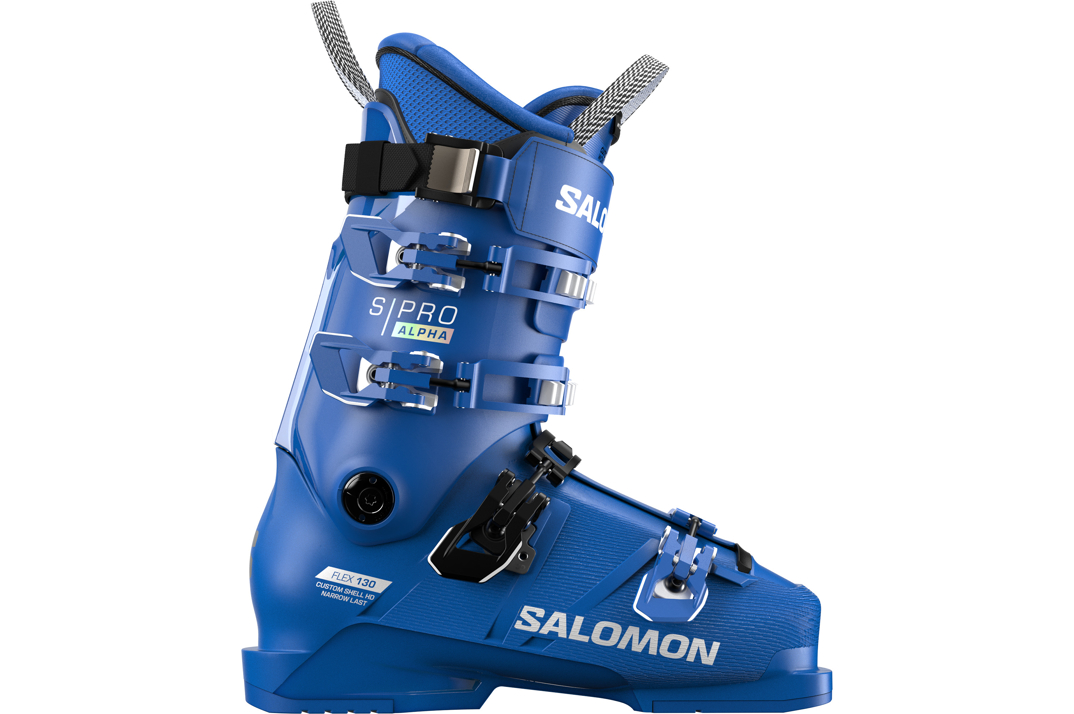
2026 Salomon S/Pro Alpha 130
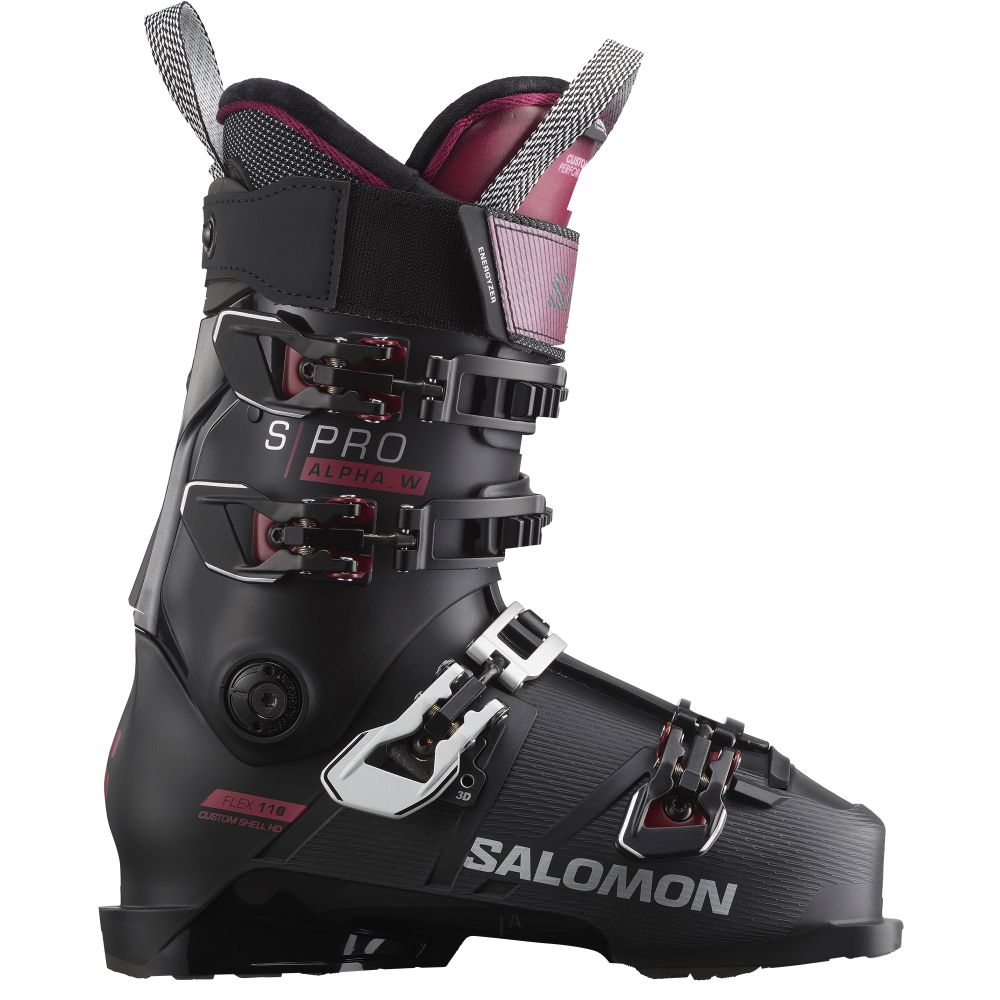
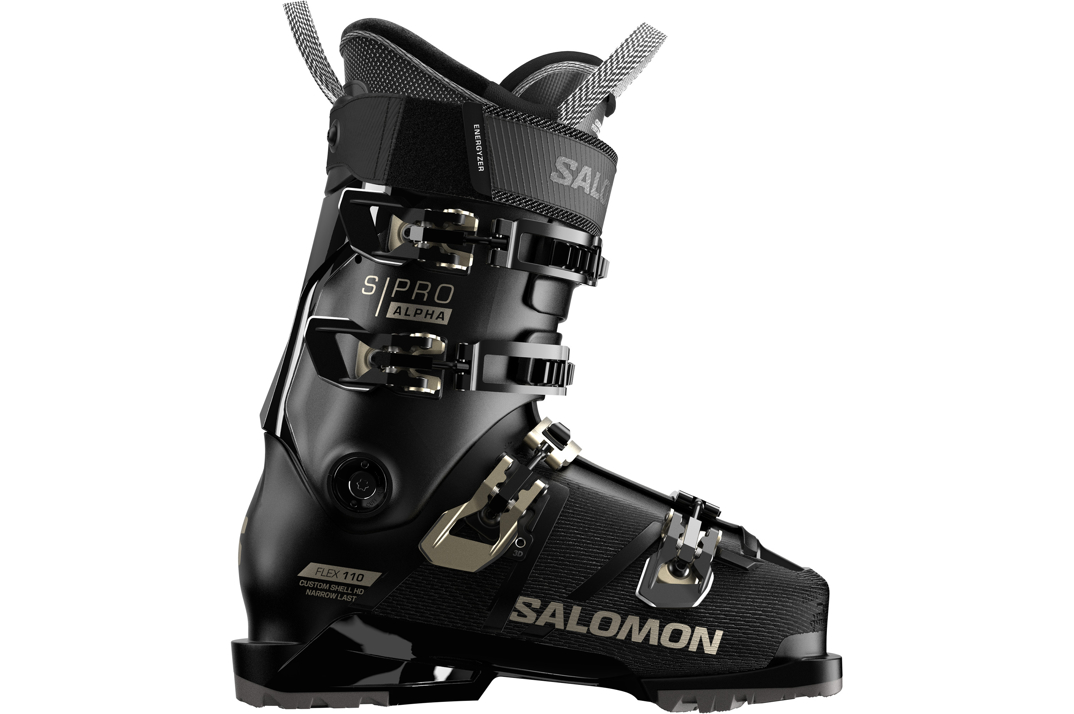
2026 Salomon S/Pro Alpha 110 W
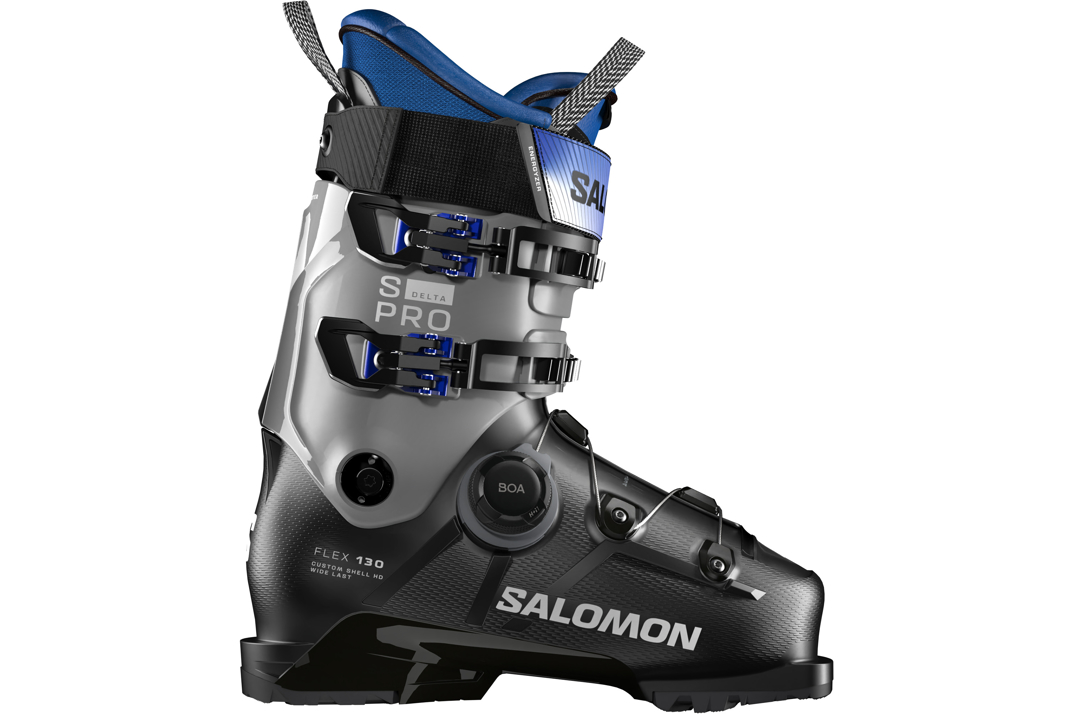
2026 Salomon S/Pro Delta BOA 130
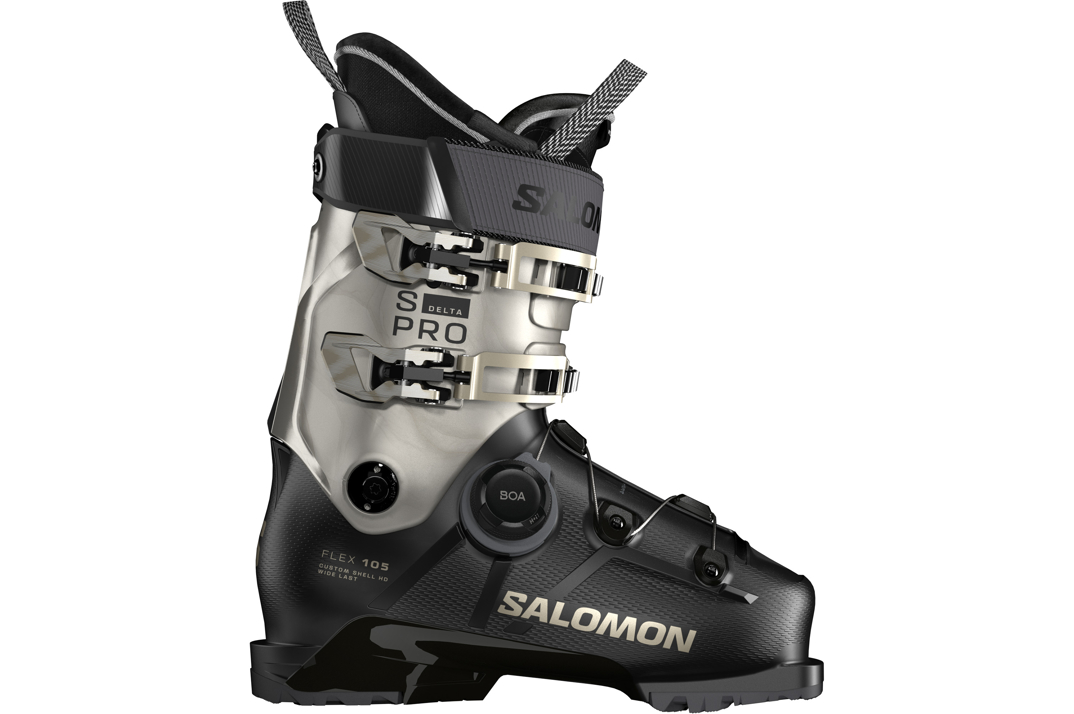
2026 Salomon S/Pro Delta BOA 105 W
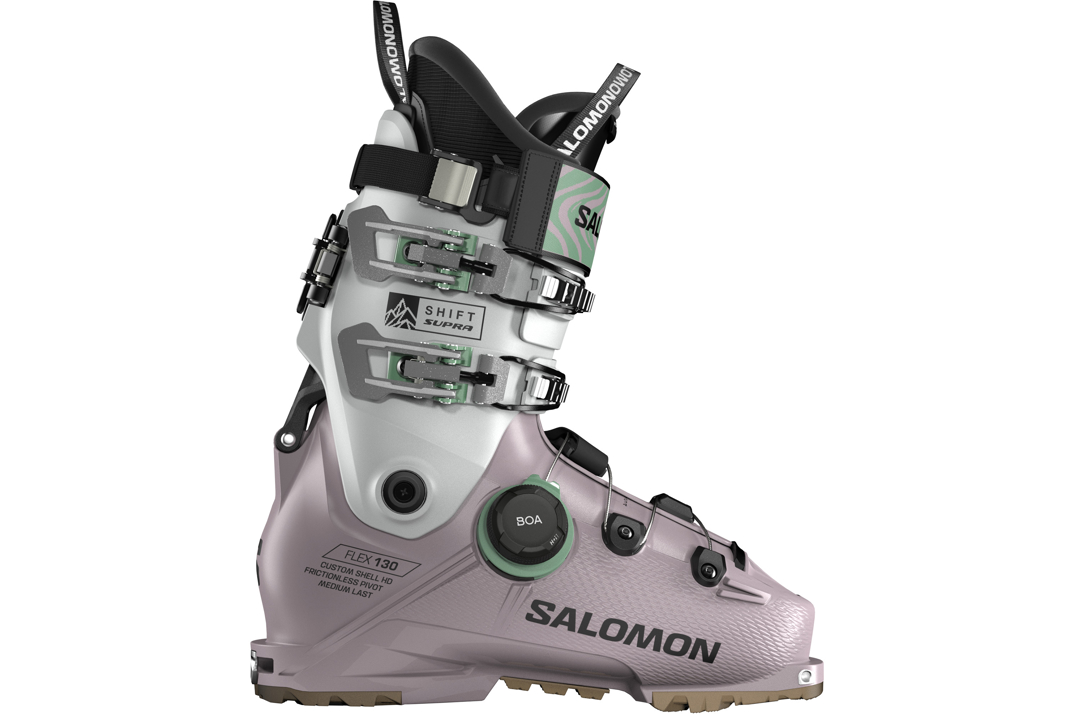
2026 Salomon S/Pro Shift Supra BOA 130
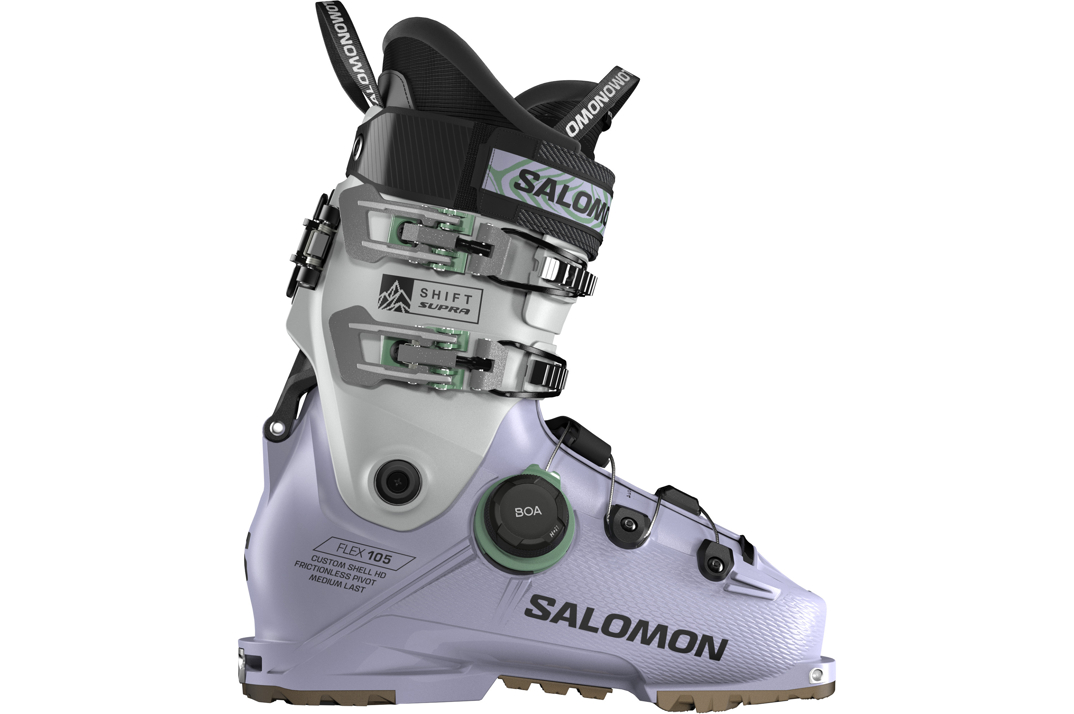
2026 Salomon S/Pro Shift Supra BOA 105 W
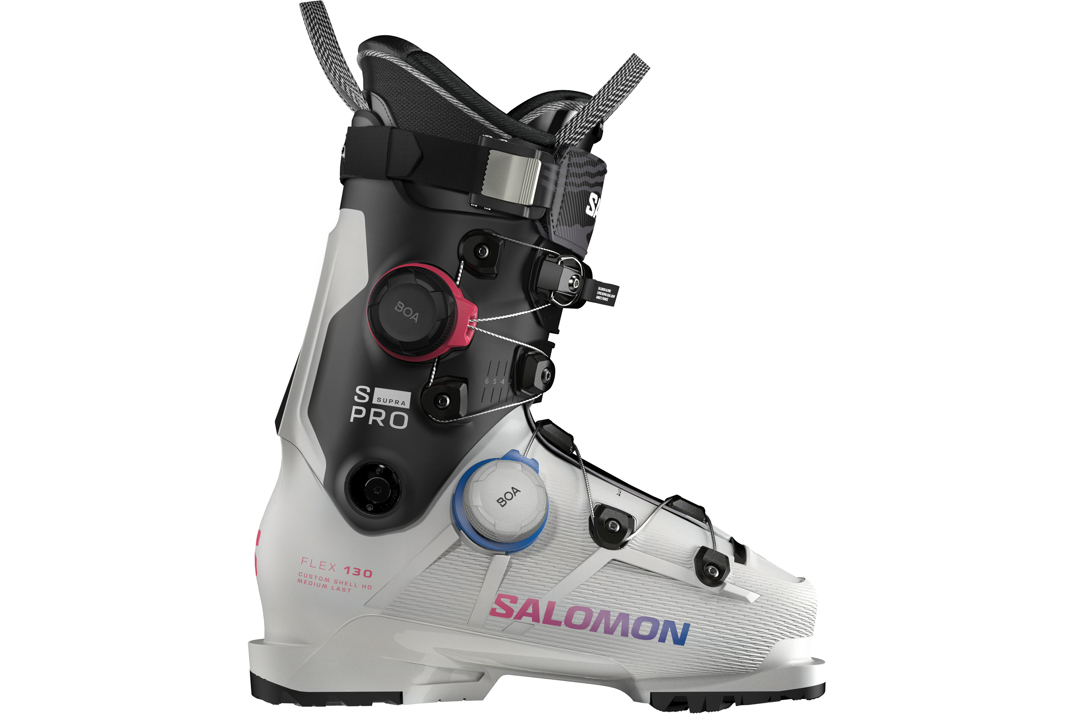
2026 Salomon S/Pro Supra Dual BOA 130