In last week’s Revelation, I wrote about the typical exchange between a prospective ski buyer and a shop salesperson. The focus was on the questions customarily posed during the getting-to-know-you interview. This week, I’m addressing the nature of the most common responses.
Bear in mind as you peruse the paragraphs below, that I have spent many hours toiling at the boot bench, hours filled with customers baring their skiing souls while I applied my ministrations to their feet. After a few hundred skier interviews, a pattern emerges.
You lie.
Well, that’s a little harsh. How about “misrepresent?” Should this notion offend you, please imagine I’m referring to someone else.
It’s not that you lie about everything. Each ski buyer attempts to be truthful on most subjects. The tendency is to only lie about the important stuff.
Let’s begin with the self-assessment of ability. The request to define oneself is often the first question asked and therefore the first golden opportunity to steer the sale sideways.
To say that customers reflexively overstate their ability would be a gross exaggeration; only men below 50 do. This isn’t so much a character flaw as an ingrained human trait.
All skiers have a movie running in their head of how they look.
In their internal imagery, they have the grace of Astaire and the power of Bode Miller. The skier the world sees has the athleticism of Charlie Brown and the power of a ten-watt bulb.
The follow-up “proof” provided by the skier under interrogation is that he or she “can ski all the black diamonds,” or some similar allusion to the slope rating system. A lot of the confusion over accurate self-appraisal stems from conflation of the supposed degree of difficulty of a particular run and the abilities of the skier who just survived it.
Fortunately, veteran salespeople can recognize lots of clues as to a customer’s most likely skill set, so even wildly inaccurate responses to questions about ability can be smoothed over.
Of course ability isn’t the only subject broached; intended frequency is bound to come up, and guess what?
You aim high.
As Seinfeld says, “Not that there’s anything wrong with that.” It’s wonderful that every season thousands of skiers buy season passes with immaculate intentions of skiing at every available opportunity.
I suppose that if every skier fulfilled their ambitions in this regard, the resorts would be so overrun every trail would be as crowded as a sidewalk in Kolkata.
What transpires instead is the intervention of something called, “life.” Life can take many forms, from bad weather, injury or illness, unexpected opportunity elsewhere, or just never getting around to picking up your pass. Things happen.
OK, so you won’t actually ski as often as you’d imagined you would. Big deal. Buy a ski for the skier you want to be and go for it. Dream large.
But wait. One other potential area of miscalculation lies just ahead. It happens when the salesperson inquires, “What terrain do you intend to ski?” and you, not wanting to restrict your options, say, “All of it.”
What’s wrong with that, I hear you cry? Certainly a lot, if not most, ski buyers must want a ski that can be skied all over the mountain. What’s wrong with stating this fairly obvious ambition?
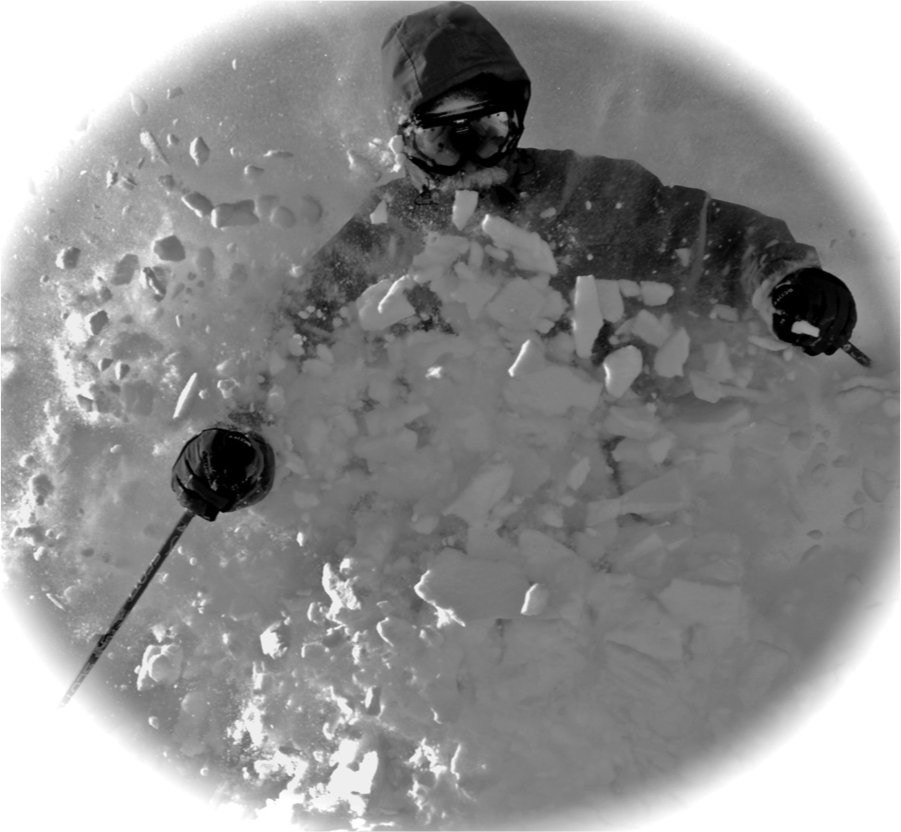
Because once again there are two opposing forces at work: fantasy and reality. The fantasy is that you’ll encounter all kinds of conditions and need to be ready for anything, including chest-deep powder. The Essence, as my co-author Guru Dave Powers calls it. The Precious.
How can anything as lovely as the dream of bottomless powder ever be pernicious? The problem isn’t the dream, it’s what the dream inspires you to do next: buy too fat a ski.
The only way to float easily in powder is to have a very fat ski, which in today’s market also means rockered to the moon. What a great tool for powder. What a hopeless, dangerous contraption for on-slope skiing.
The reality is your diet will consist of large portions of groomage. You should place a premium on in-bounds, on-slope performance for any ski you intend to use every day.
Why am I getting all huffy on a subject that may seem innocuous? Because skiing a ski too wide for the conditions puts both your knees and the safety of other skiers around you at risk.
Skis are meant to be steered with their edges. A ski that can’t be edged can only steer by drifting, which is sort of like driving on an oil slick. You can control where you’re going, sort of, but your options are limited.
If you’re in the market for a new ski this year, by all means embrace your most cherished fantasies, but be realistic about where you actually ski. Keeping the slopes safe for all of us who share them may depend on it.