

It’s my understanding that a great many of my fellow citizens do their gift shopping well in advance of the due date. While I appreciate this preparedness in principle, I find it very difficult to put into personal practice. Like Santa himself, who doesn’t even begin to distribute gifts until the last possible moment, I find procrastination built into the fabric of the holidays.
My point being, it’s not too late to surprise a skier or two on your holiday hit list with an impressively thoughtful gift. I’m not suggesting anything of stratospheric expense, but I am encouraging you to pick something that your recipients wouldn’t ordinarily think to get for themselves. Many are small enough to fit into a stocking, and none require assembly. I know you’re busy – procrastination, by definition, takes a lot of time – so I’ll get right to the nitty-gritty.
LÉ BENT ¾ Bottom Base Layer
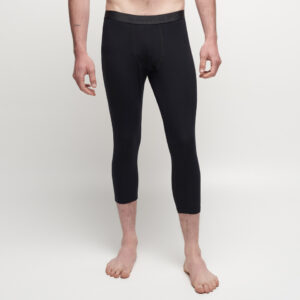
Lé Bent’s blend of Merino and bamboo makes a divine base layer that feels so good you’ll want to wear it all the time. The ¾ length is a better match with ski socks, but if you’re bent on a full-length base layer, Lé Bent makes those, too.
Leki Trigger-Grip Poles
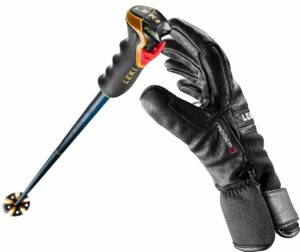
Leki’s terrific Trigger-grip poles are the perfect gift for the ski addicts in your life who say they don’t need new poles. Of course, they don’t need them, that’s what makes the upgrade to a Leki the epitome of the surprise “gift-they-wouldn’t-get-themselves.”
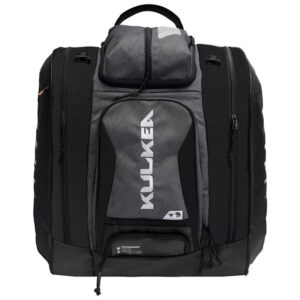
Heated Boot Bag
The Heated Boot Bag might be the greatest ski-related accessory ever made. Why there’s scant science (yet) to support the assertion, I believe whomever is gifted a heated boot bag will be insanely grateful, most likely forever. I realize I’ve just directed you to Snow Eagle’s url, but I’d rather you frequent your preferred specialty ski shop for this item, where you’ll find other options in the same design plus you’ll be supporting specialty retailing, which matters. Other brands of note in the heated-boot-bag sector are Kulkea, perhaps the best-made bag line for skiing, and Transpak for value, reliability and durability.
Ski Socks
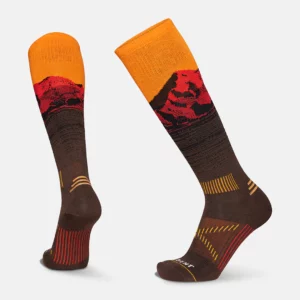
Real skiers know that wearing a real ski sock is a difference maker. Every avid skier can use another pair, making them a surefire winner in the gift-giving game. It’s hard to recommend one brand above all others, as the ski market is swarming with socks, but I do recommend only one thickness, which is thin. Since I know you want me to name names, there’s Smartwool, Point6, Darn Tough, Eurosock, Farm to Feet, and Lé Bent, particularly when you want something a bit thicker. Dissent Compression socks fit like a second skin and there are even heated socks from Hotronic, which are pricey but effective.
Balaclava/Neck Gaiter
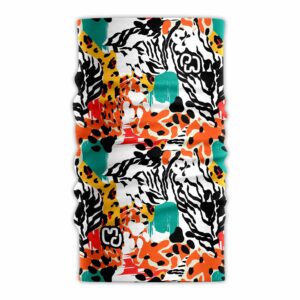
While helmets are essential equipment, they’re a sizeable investment and they need to be fit, making them an awkward gift item. But there’s nothing tricky about a neck gaiter, or balaclava. One of the under-reported benefits of the pandemic is almost everyone discovered how useful it is to have this extra layer for the face. The best ones, like Lé Bent, feel scrumptious on the skin. I’m also a fan of Phunkshun, who offers a crazy array of colors and styles. A great accessory, relatively cheap, fits any stocking!
Gummi stone
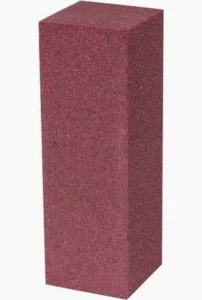
A nicked edge or worse yet, one that is overly aggressive, begs for attention, the sooner the better. While a gummi stone isn’t a substitute for a more thorough repair, it’s a godsend when it’s needed and it fits into anything worthy of the term, “pocket.” They don’t cost much and they last a long time.
Ski-Gee
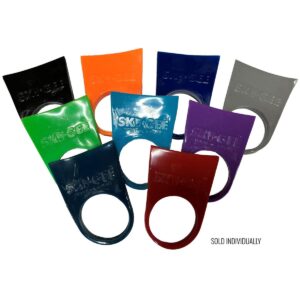
The greatest cost/value relationship in skiing. It’s a goggle-wiper you wear on your finger. A lifesaver on weather days, it does the one thing your zillion-dollar goggles can’t.
Sun Screen & Lip Balm
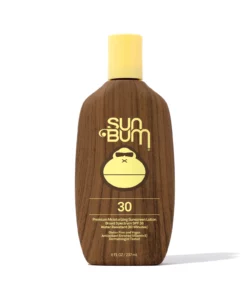
Every stocking needs stuffers like sun screen and lip balm. The high-altitude Alpine sun is brutal on lips and skin, so going without isn’t an option. What brands you use are far less important than a high SPF.
Ski Strap
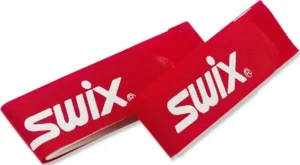
An accessory so pervasive and mundane that it almost doesn’t merit a link, the humble ski strap is nonetheless one item skiers can’t get enough of. Falls in the “stocking-friendly” category.
Lightweight Vest
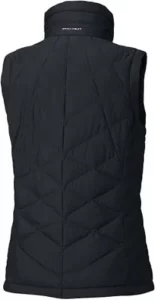
I don’t want to wander too deep into a skier’s clothing closet, but in the spirit of accessorizing, a thin layer with some sort of windbreaking ability – I prefer a vest, for it adds the least bulk – is de rigeur if you ski in foul weather. Let me give you a bit of parting advice: life is short, too short not to ski whenever you can, which includes storm days, which often include wind that could cut through rare beef. A thin extra layer takes no room to transport – it will fit in your heated boot bag! – and saves the day when the powder is loading up between every run.
Related Articles
Is 3D Imaging a Fad or the Future?
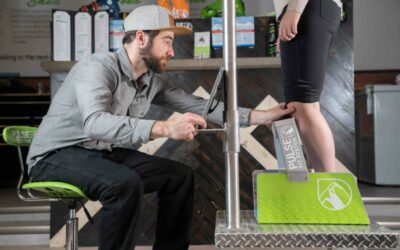
Any serious attempt at bootfitting begins with an assessment of the customer’s feet and lower legs. This appraisal can be as superficial as measuring each foot for length or as detailed as a complete skier profile accompanied by a few basic biomechanical evaluations.
Better bootfitters gather further information from a litany of details that lie outside the scope of the usual foot-measuring device, such as a Brannock. The veteran bootfitter watches how the customer walks, sits and assumes a skiing position, for starters. The savvy fitter can even spot limb-length differences and redistribute pressure around the foot in places no measuring stick can quantify.
If this sounds like a pretty sophisticated skill set, well, it is. Yet many, if not most, prospective boot buyers approach the bootfitting exercise with the same enthusiasm they usually reserve for a root canal. Suspicions are often confirmed when the first boot proffered seems crazily short. Even the most knowledgeable fitter is obliged to re-establish his/her credibility just to move the bootfit process pass square one.
Of Podcasts, Archives & Revelations
According to my tight-knit circle of advisors, idolaters, sycophants and astrologers, I was made for this medium.
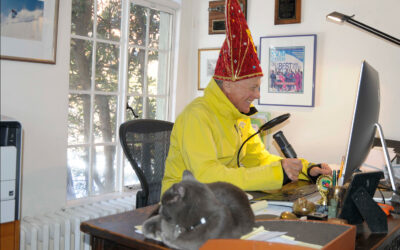
Of course, any garden-variety sycophant will whisper words of inspirational twaddle, but the faint note of sincerity I detect in the smarm-storm of platitudes meant to buck me up has proven sufficient to spur me to action. I quickly acquired a very professional looking microphone and a pop filter to knock down my fierce sibilants. To preserve my objectivity, I opted not to take any lessons, follow any tutorials or otherwise prepare myself for this venture. By the powers vested in me as the Pontiff of Powder, I declare myself to be, now and forever after, a podcaster.
I’ll give you a moment to recover.

The Making of a Skier, Chapter XI: Desperate Measures
When Head humanely, if rather brusquely, terminated my tenure in 2001, the ski business in the U.S. was already facing stiff headwinds, a brewing storm that would turn into a full-on debacle when 9/11 disrupted all commerce. I became unemployed just in time for the job market to implode.
I don’t handle inactivity well. I started writing a very long, very dreadful novel, composed a handful of scripts for Warren Miller – and later, Jeremy Bloom – to recite and scribbled batches of brochure copy and white papers for industries as diverse as accounting software, instrumented football helmets that registered concussions and risk assessment based on location.
The pickings were slim, but they wouldn’t have amounted to anything at all were it not for a little help from my friends. Andy Bigford, who I’d worked with at Snow Country, hired me for the Warren Miller gig. A college chum kindly engaged me to write white papers on accounting fraud. But it was Dave Bertoni, an erstwhile colleague from Salomon days, who joined me in creating Desperate Measures: A Training Method for Selling Technical Products at Retail.
