

It snowed in Reno last night.
There’s nothing like waking to a fresh blanket of snow draped over every inch of the landscape to kick-start the dormant machinery that monitors one’s skiing life. You probably took care of the season pass issue so long ago it seems disconnected from the rest of the process, but everything else on the to-do list merits your attention. Let’s take a look at what you should be doing soon – as in, before the holidays – if you want a clean start out of the gate when it’s finally time to put skis on snow.
We’ll begin with the fundamentals: locate whatever skis and boots you used last season and give them a thorough inspection. While you’re giving them the once-over, ponder this: how old is your gear now? Are your skis more than eight years old? What vintage are your boots, and how well have they been fitting lately? I raise what is perhaps an obvious point, but equipment ages whether you use it or not. (Fun experiment: try to put on a mint-condition, 140-flex boot that’s been sitting in a box for ten years. Good luck.)
If your boots are three years old, say, and look like they’re in pretty good shape, chances are they’re still fine, but there’s an equal chance that the fit has evolved. Nothing refreshes a fit as effectively and inexpensively as replacing the aged insole with a drop-in (i.e., not a custom insole) with an arch that roughly matches the underside of your foot. While a fresh, off-the-rack insole is better than nothing, if you’ve never used a custom insole, I strongly advise you to consider one. Here’s why.
Skiing is a sport of balance. The reason Nature loaded your arch with more proprioceptive sensors than any other zone on your body is because it’s vital to maintaining balance, without which bipeds won’t long survive. The better the connection between the arch support and the arch, the more information is fed into the balance matrix that keeps you upright. If the two surfaces don’t connect, it’s as if the signals coming through arch were a ringing phone that no one picked up.
A custom insole does many other things, such as slightly shorten and narrow the average foot, as well as helping the rest of the foot better match the contours of the liner and shell, but its role in maintaining balance is its primordial virtue.
One important cautionary note: If you’ve bought a new boot recently, it might have a GripWalk sole, which is all fine and dandy if it’s paired with a GripWalk or Multi-Norm binding, but some older bindings aren’t GripWalk compatible. Always check with a certified binding tech to be sure any ski/binding/boot system you intend to use is operating properly.
My first unscheduled bootfit of the 22/23 season stemmed from an equipment inspection that provided a classic demonstration of the perils of buying gear on the Internet. The man who sat before me – let’s call him Mike – had already acquired boots. All he needed from me was to consummate the fitting process and mount his new skis.
It took all of 60 seconds to expose the folly of his online purchase. Nothing wrong with the boots he selected per se, but they were a full size too big and most likely too soft for a man of Mike’s generous dimensions. After I nixed the boots, the skis Mike had been steered into by his online advisor suffered the same fate. They, too, were the wrong size – this time, too small – and likewise a poor match for Mike.
I realize I’ve veered off-topic, but online equipment shopping has become so commonplace its pitfalls bear mention at every opportunity. By all means, use the Internet to do research – at Realskiers.com, for example – but it is not the place to consummate a sale. Online “advisors” or “curators” or whatever rubric is used to describe online equipment vendors, cannot possibly do the job of a veteran bootfitter who is sitting in front of you. Put another way, someone who knows what he or she is doing needs to see and palpate your bare feet. Period. Accept no substitutes, because there are none.
While we’re on the subject of boots, if you’re over 60, you’re overdue for a heated boot bag. Even if you can get a cold boot on your long-suffering foot, it’s an inhospitable environment that need not be endured. You might consider it an indulgence, but as we get older it begins to look a lot more like a necessity.
Enough about boots; what about your skis? What sort of pre-season prep do they require?
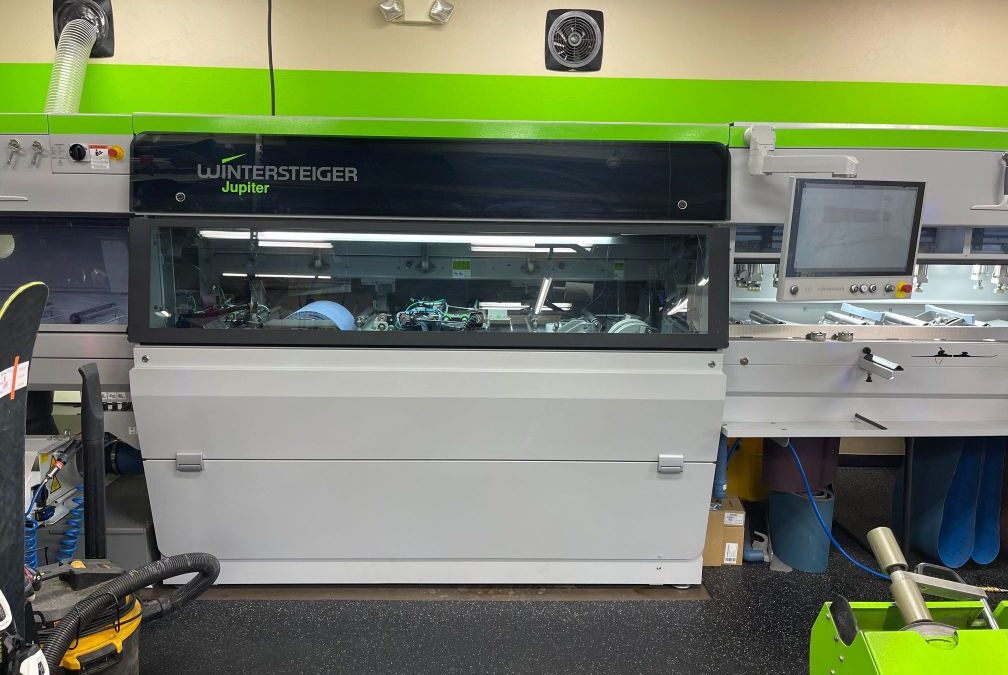
If you didn’t attend to their care last season, the very least you can do is start off the new season on the right foot by freshening up the edges and bases. There are new tuning machines that do an immaculate job that is as good or better than what any supplier is providing out of the box. They’re like the Fountain of Youth for your skis. You’ll pay an upcharge to get your edges re-set and your bases re-structured, but it’s worth every penny.
We tend to think of our bindings as bulletproof, given the rough treatment they often receive just getting in and out of them, but they are not immune to age or abuse. Once a season – now would be a good time – get them properly inspected by a certified mechanic. Avoid using any boot/binding combination that hasn’t been vetted by a binding tech; mis-matched boots and bindings are contributing to an increase in the sort of tibia fractures we’d all but eliminated 20 years ago.
My concluding piece of advice on the subject of pre-season equipment prep is to get whatever you need done as soon as possible. If we’re blessed with more early snow, America’s under-staffed ski shops will be over-flowing with skiers of every stripe, all clamoring to get their business done now, and finding out that’s not going to happen. Please don’t get mad at the tech who tells you it’s going to be a week before you see your skis again; if you want work done faster than normal, you might have to apply a little grease to the machinery, if you catch my drift. Tipping isn’t the name of a city in China…

Related Articles

Road Tripping
Among the many dissatisfactions of this most unusual season is that travel beyond one’s local environs has been roundly discouraged. Don’t get me wrong: I’m grateful down to my socks that we’re allowed to ski locally, and my version of same is pretty sweet. Pardon the plug, but between Alpine Meadows, Squaw Valley and Mt. Rose I have a smorgasbord of savory choices.
But skiing close to home and skiing on the road are two different beasts. Nothing is the same, really, and therein lies a great deal of the road trip’s charms.
To shed light on my premise, allow me to pull back the veil on my favorite away game, an annual pilgrimage to Little Cottonwood Canyon. By the end of this brief travelogue you will probably hate me, so please fill your vessel of good will to the rim before proceeding.
It’s About Nothing
In the last week of January,2009 I was able to spend a few days skiing in Little Cottonwood Canyon, which is always cathartic for my ravaged soul. The conditions were all over the map, the mountains having experienced a long, hot spell followed by rain, grapple, wet snow and finally dry snow driven by winds that could flense an adult walrus in a few minutes. Couldn’t have been better.
I had been preparing for the trip for weeks, psychologically. Two back surgeries the previous winter had reduced my training regimen from semi-annual to non-existent. Scheduling conflicts such as work kept me from visiting the areas that abound at home near Lake Tahoe, so I had zero ski days on a body with more fat on it than a French duck. I had as much chance of surviving Snowbird and Alta as a rib roast in a piranha tank.
Fortunately, the Lord is merciful, anti-inflammatory drugs are powerful and there are techniques that allow one to block out pain. There are also many wonderful people in this world with which to ski, kind people who stand quietly by, pretending to be in awe of Nature, while my chest heaves so violently in its futile quest for oxygen that tiny lung particles break lose and make for the exits. One such person is Guru Dave Powers, a man whose passion for the sport hasn’t diminished after thousands of days of riding gravity down the infinitely variable slopes and crannies of Snowbird. The Goo knows this hill, and in knowing it well knows so much more.

The Making of a Skier, Chapter XII: Putting Words into the Mouth of God & Other Mid-Life Adventures
When I was cut adrift by Head on June 13, 2001, my once glowing prospects dimmed considerably. The date is etched in memory because I hosted a small soirée that evening in honor of my darling wife’s 50th birthday. One of the attendees was Paul Hochman, who would play several roles in my life as I wandered in the wilderness of unemployment during what were supposed to be my peak earning years.
During the gaping hole in my career that spanned 2001-2011, I would eventually spend every cent of my inheritance, plus most of what I’d saved from earlier bouts with gainful employment, just keeping the household afloat. Despite a river of red ink, my resume would suggest that I was not only commercially active during this epoch, but had my hand in all sorts of ventures.
