

It snowed in Reno last night.
There’s nothing like waking to a fresh blanket of snow draped over every inch of the landscape to kick-start the dormant machinery that monitors one’s skiing life. You probably took care of the season pass issue so long ago it seems disconnected from the rest of the process, but everything else on the to-do list merits your attention. Let’s take a look at what you should be doing soon – as in, before the holidays – if you want a clean start out of the gate when it’s finally time to put skis on snow.
We’ll begin with the fundamentals: locate whatever skis and boots you used last season and give them a thorough inspection. While you’re giving them the once-over, ponder this: how old is your gear now? Are your skis more than eight years old? What vintage are your boots, and how well have they been fitting lately? I raise what is perhaps an obvious point, but equipment ages whether you use it or not. (Fun experiment: try to put on a mint-condition, 140-flex boot that’s been sitting in a box for ten years. Good luck.)
If your boots are three years old, say, and look like they’re in pretty good shape, chances are they’re still fine, but there’s an equal chance that the fit has evolved. Nothing refreshes a fit as effectively and inexpensively as replacing the aged insole with a drop-in (i.e., not a custom insole) with an arch that roughly matches the underside of your foot. While a fresh, off-the-rack insole is better than nothing, if you’ve never used a custom insole, I strongly advise you to consider one. Here’s why.
Skiing is a sport of balance. The reason Nature loaded your arch with more proprioceptive sensors than any other zone on your body is because it’s vital to maintaining balance, without which bipeds won’t long survive. The better the connection between the arch support and the arch, the more information is fed into the balance matrix that keeps you upright. If the two surfaces don’t connect, it’s as if the signals coming through arch were a ringing phone that no one picked up.
A custom insole does many other things, such as slightly shorten and narrow the average foot, as well as helping the rest of the foot better match the contours of the liner and shell, but its role in maintaining balance is its primordial virtue.
One important cautionary note: If you’ve bought a new boot recently, it might have a GripWalk sole, which is all fine and dandy if it’s paired with a GripWalk or Multi-Norm binding, but some older bindings aren’t GripWalk compatible. Always check with a certified binding tech to be sure any ski/binding/boot system you intend to use is operating properly.
My first unscheduled bootfit of the 22/23 season stemmed from an equipment inspection that provided a classic demonstration of the perils of buying gear on the Internet. The man who sat before me – let’s call him Mike – had already acquired boots. All he needed from me was to consummate the fitting process and mount his new skis.
It took all of 60 seconds to expose the folly of his online purchase. Nothing wrong with the boots he selected per se, but they were a full size too big and most likely too soft for a man of Mike’s generous dimensions. After I nixed the boots, the skis Mike had been steered into by his online advisor suffered the same fate. They, too, were the wrong size – this time, too small – and likewise a poor match for Mike.
I realize I’ve veered off-topic, but online equipment shopping has become so commonplace its pitfalls bear mention at every opportunity. By all means, use the Internet to do research – at Realskiers.com, for example – but it is not the place to consummate a sale. Online “advisors” or “curators” or whatever rubric is used to describe online equipment vendors, cannot possibly do the job of a veteran bootfitter who is sitting in front of you. Put another way, someone who knows what he or she is doing needs to see and palpate your bare feet. Period. Accept no substitutes, because there are none.
While we’re on the subject of boots, if you’re over 60, you’re overdue for a heated boot bag. Even if you can get a cold boot on your long-suffering foot, it’s an inhospitable environment that need not be endured. You might consider it an indulgence, but as we get older it begins to look a lot more like a necessity.
Enough about boots; what about your skis? What sort of pre-season prep do they require?
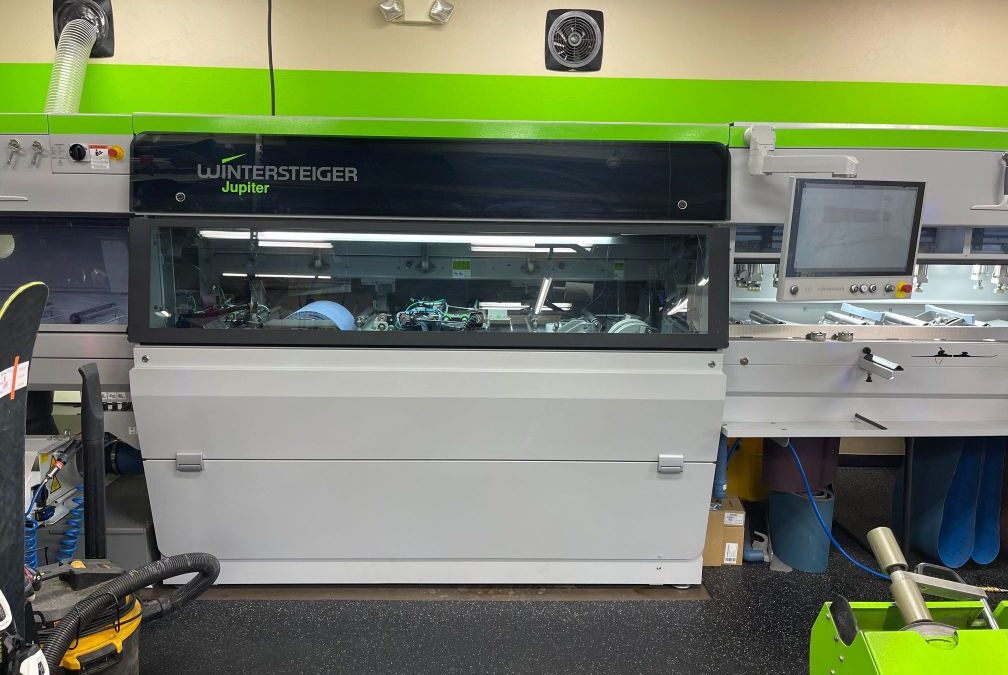
If you didn’t attend to their care last season, the very least you can do is start off the new season on the right foot by freshening up the edges and bases. There are new tuning machines that do an immaculate job that is as good or better than what any supplier is providing out of the box. They’re like the Fountain of Youth for your skis. You’ll pay an upcharge to get your edges re-set and your bases re-structured, but it’s worth every penny.
We tend to think of our bindings as bulletproof, given the rough treatment they often receive just getting in and out of them, but they are not immune to age or abuse. Once a season – now would be a good time – get them properly inspected by a certified mechanic. Avoid using any boot/binding combination that hasn’t been vetted by a binding tech; mis-matched boots and bindings are contributing to an increase in the sort of tibia fractures we’d all but eliminated 20 years ago.
My concluding piece of advice on the subject of pre-season equipment prep is to get whatever you need done as soon as possible. If we’re blessed with more early snow, America’s under-staffed ski shops will be over-flowing with skiers of every stripe, all clamoring to get their business done now, and finding out that’s not going to happen. Please don’t get mad at the tech who tells you it’s going to be a week before you see your skis again; if you want work done faster than normal, you might have to apply a little grease to the machinery, if you catch my drift. Tipping isn’t the name of a city in China…

Related Articles
U.S. Shops with 3-D Scanning Capability
Far West Footloose Sports, Mammoth Lakes, CA (BootDoc) California Ski Company, Berkley CA (Fischer) Gravity Sports, Mt. Bachelor, OR (Pulse) Start Haus, Truckee, CA (Pulse) Sports Creel, Spokane, WA...
Is 3D Imaging a Fad or the Future?
Any serious attempt at bootfitting begins with an assessment of the customer’s feet and lower legs. This appraisal can be as superficial as measuring each foot for length or as detailed as a complete skier profile accompanied by a few basic biomechanical evaluations.
Better bootfitters gather further information from a litany of details that lie outside the scope of the usual foot-measuring device, such as a Brannock. The veteran bootfitter watches how the customer walks, sits and assumes a skiing position, for starters. The savvy fitter can even spot limb-length differences and redistribute pressure around the foot in places no measuring stick can quantify.
If this sounds like a pretty sophisticated skill set, well, it is. Yet many, if not most, prospective boot buyers approach the bootfitting exercise with the same enthusiasm they usually reserve for a root canal. Suspicions are often confirmed when the first boot proffered seems crazily short. Even the most knowledgeable fitter is obliged to re-establish his/her credibility just to move the bootfit process pass square one.

Of Podcasts, Archives & Revelations
According to my tight-knit circle of advisors, idolaters, sycophants and astrologers, I was made for this medium.
Of course, any garden-variety sycophant will whisper words of inspirational twaddle, but the faint note of sincerity I detect in the smarm-storm of platitudes meant to buck me up has proven sufficient to spur me to action. I quickly acquired a very professional looking microphone and a pop filter to knock down my fierce sibilants. To preserve my objectivity, I opted not to take any lessons, follow any tutorials or otherwise prepare myself for this venture. By the powers vested in me as the Pontiff of Powder, I declare myself to be, now and forever after, a podcaster.
I’ll give you a moment to recover.
