

It snowed in Reno last night.
There’s nothing like waking to a fresh blanket of snow draped over every inch of the landscape to kick-start the dormant machinery that monitors one’s skiing life. You probably took care of the season pass issue so long ago it seems disconnected from the rest of the process, but everything else on the to-do list merits your attention. Let’s take a look at what you should be doing soon – as in, before the holidays – if you want a clean start out of the gate when it’s finally time to put skis on snow.
We’ll begin with the fundamentals: locate whatever skis and boots you used last season and give them a thorough inspection. While you’re giving them the once-over, ponder this: how old is your gear now? Are your skis more than eight years old? What vintage are your boots, and how well have they been fitting lately? I raise what is perhaps an obvious point, but equipment ages whether you use it or not. (Fun experiment: try to put on a mint-condition, 140-flex boot that’s been sitting in a box for ten years. Good luck.)
If your boots are three years old, say, and look like they’re in pretty good shape, chances are they’re still fine, but there’s an equal chance that the fit has evolved. Nothing refreshes a fit as effectively and inexpensively as replacing the aged insole with a drop-in (i.e., not a custom insole) with an arch that roughly matches the underside of your foot. While a fresh, off-the-rack insole is better than nothing, if you’ve never used a custom insole, I strongly advise you to consider one. Here’s why.
Skiing is a sport of balance. The reason Nature loaded your arch with more proprioceptive sensors than any other zone on your body is because it’s vital to maintaining balance, without which bipeds won’t long survive. The better the connection between the arch support and the arch, the more information is fed into the balance matrix that keeps you upright. If the two surfaces don’t connect, it’s as if the signals coming through arch were a ringing phone that no one picked up.
A custom insole does many other things, such as slightly shorten and narrow the average foot, as well as helping the rest of the foot better match the contours of the liner and shell, but its role in maintaining balance is its primordial virtue.
One important cautionary note: If you’ve bought a new boot recently, it might have a GripWalk sole, which is all fine and dandy if it’s paired with a GripWalk or Multi-Norm binding, but some older bindings aren’t GripWalk compatible. Always check with a certified binding tech to be sure any ski/binding/boot system you intend to use is operating properly.
My first unscheduled bootfit of the 22/23 season stemmed from an equipment inspection that provided a classic demonstration of the perils of buying gear on the Internet. The man who sat before me – let’s call him Mike – had already acquired boots. All he needed from me was to consummate the fitting process and mount his new skis.
It took all of 60 seconds to expose the folly of his online purchase. Nothing wrong with the boots he selected per se, but they were a full size too big and most likely too soft for a man of Mike’s generous dimensions. After I nixed the boots, the skis Mike had been steered into by his online advisor suffered the same fate. They, too, were the wrong size – this time, too small – and likewise a poor match for Mike.
I realize I’ve veered off-topic, but online equipment shopping has become so commonplace its pitfalls bear mention at every opportunity. By all means, use the Internet to do research – at Realskiers.com, for example – but it is not the place to consummate a sale. Online “advisors” or “curators” or whatever rubric is used to describe online equipment vendors, cannot possibly do the job of a veteran bootfitter who is sitting in front of you. Put another way, someone who knows what he or she is doing needs to see and palpate your bare feet. Period. Accept no substitutes, because there are none.
While we’re on the subject of boots, if you’re over 60, you’re overdue for a heated boot bag. Even if you can get a cold boot on your long-suffering foot, it’s an inhospitable environment that need not be endured. You might consider it an indulgence, but as we get older it begins to look a lot more like a necessity.
Enough about boots; what about your skis? What sort of pre-season prep do they require?
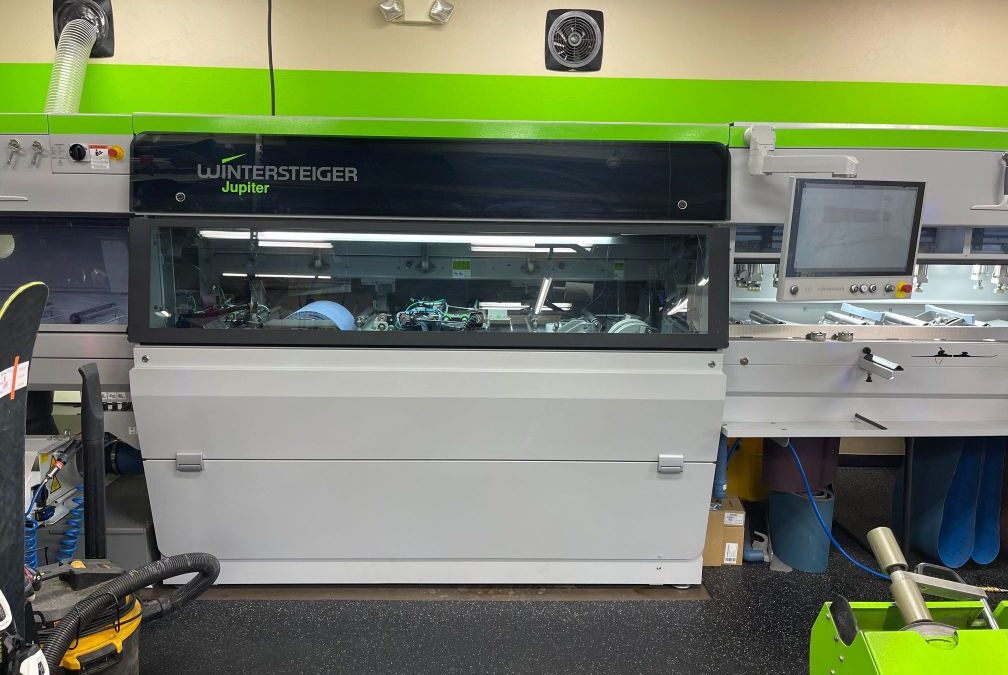
If you didn’t attend to their care last season, the very least you can do is start off the new season on the right foot by freshening up the edges and bases. There are new tuning machines that do an immaculate job that is as good or better than what any supplier is providing out of the box. They’re like the Fountain of Youth for your skis. You’ll pay an upcharge to get your edges re-set and your bases re-structured, but it’s worth every penny.
We tend to think of our bindings as bulletproof, given the rough treatment they often receive just getting in and out of them, but they are not immune to age or abuse. Once a season – now would be a good time – get them properly inspected by a certified mechanic. Avoid using any boot/binding combination that hasn’t been vetted by a binding tech; mis-matched boots and bindings are contributing to an increase in the sort of tibia fractures we’d all but eliminated 20 years ago.
My concluding piece of advice on the subject of pre-season equipment prep is to get whatever you need done as soon as possible. If we’re blessed with more early snow, America’s under-staffed ski shops will be over-flowing with skiers of every stripe, all clamoring to get their business done now, and finding out that’s not going to happen. Please don’t get mad at the tech who tells you it’s going to be a week before you see your skis again; if you want work done faster than normal, you might have to apply a little grease to the machinery, if you catch my drift. Tipping isn’t the name of a city in China…

Related Articles

The Making of a Skier, Part IX: The ASTM, Carl Ettlinger and I
One of the many hats I wore as North American binding product manager for Salomon in the early 1980’s was that of delegate to the American Society for Testing and Materials (ASTM). I believe the first meeting of F8.14 – the sub-committee on ski safety – that I attended was in Pennsylvania. I was flying under the wings of Salomon’s seer of all standards and patents, Gilbert Delouche, and the binding product manager for the North American zone at that time (and my mentor), Joe Campisi.
I was a babe in the woods, but I soon caught on to the game under Delouche’s patience guidance. I recall a debate on the binding specification then being batted around in the technical committee chaired by Carl Ettlinger. Ettlinger wanted language that would require any release/retention setting of 10 or above to be “visually distinctive” from the rest of the scale.
In Memorium, Carl Ettlinger
Carl was a giant of a man whose outsized voice roiled every conversation like a burst dam and whose expansive vision reached across the mixed milieus of research, journalism, risk management and education. I knew him when he was at the peak of his powers, as he explained to me when I interviewed him for a “where are they now?” profile in Skiing History. He was able to conduct long-term research on injury patterns as well as analyze the particulars of the current binding market, turn around and package this knowledge into articles for Skiing and Skiing Trade News, followed up by a workshop tour that would bring enlightenment to the grassroots level. No one but Carl could have pulled this off, and Lord knows no one has had the requisite talent, energy and will power since.
But time and tide wait for no man, and Carl’s finely spun web of influence was eventually plucked apart. The loss of his pivotal positions in the press allowed him to slip from public view before we, the skiers of the world, realized we hadn’t taken the time to thank him.
We have the time to thank him now.
So thanks, Carl, for being first and foremost a teacher, for teaching is at the heart of the evangel’s mission.
Thanks for being so damn stubborn. Your insistence on improving skier safety wore through a wall of resistance as tough as Vermont marble.
Thanks for having a heart as big as that melon-sized head of yours. The fuel to your tireless mind was a caring heart that tried to embrace the world.
Thanks for all the stories once the Mount Gay flowed. Who knew we would have won the Vietnam War if only his superiors had listened? I can’t remember exactly how – he wasn’t the only one drinking Mount Gay – but I recall the light in his eyes as he relayed his twisted tales, taking us down successive rabbit-holes of digression that I lost track of at the seventh level.
That’s what I remember most vividly about my many interactions with Carl: his brain so teemed with thoughts he rushed to get them out in a verbal jailbreak that would travel around the cosmos until returning, many lost minutes later, to the subject that had inspired them. That was Carl: too many words for one sentence, too many tasks to tend to and all of it, every erg of his endless energy, devoted to a cause he never ceased to serve.
Fare thee well, Carl Ettlinger. The world misses you already for it will never see another quite like you, whose every moment seemed larger than life itself.
I raise my glass to you, old friend. Mount Gay, of course.
Jackson Hogen
June 23, 2020

Why This Buyer’s Guide?
Don’t read the 2021 Masterfit Buyer’s Guide in Partnership with Realskiers.com for its 62 ski reviews. I should know. I wrote or edited all of them.
Not that the ski reviews aren’t worth the read. But ski reviews on the web are as common as rice, while the Buyer’s Guide contains something no other publication, whether in digital, print or video format, can claim: the most respected, thorough and dependable boot reviews in the world.
This isn’t mere puffery. The Masterfit Boot Test is so well regarded by the supplier community that nearly every brand not only sends its following year’s line-up in four men’s sizes plus three for women, it also dispatches its top designers and/or product managers to a distant North American site for most of the test’s five-day duration.
