
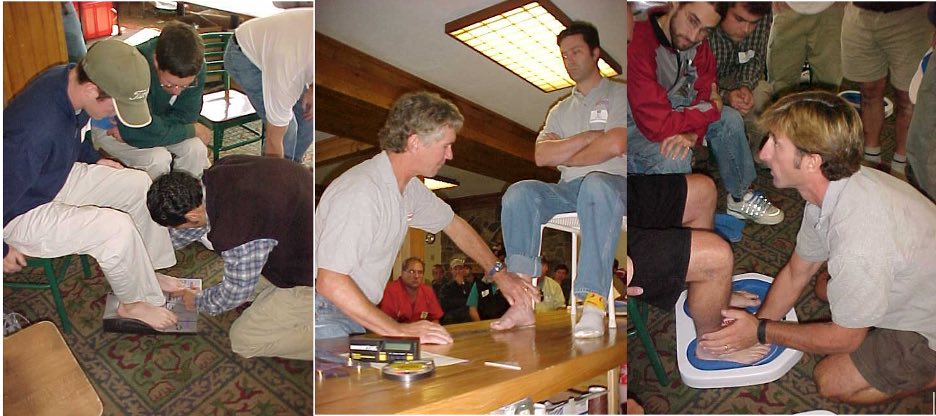

My central message this week is so primordial, so foundational, that it applies to every skier and every shop that hopes to serve them: boots matter most. Anyone remotely interested in skiing safely and comfortably should spend the time and resources to be properly fit. Nothing else you can do, buy or rent can overcome the handicaps imposed by bad boot selection and/or shoddy bootfitting.
As an industry, we try to get this message across by focusing the rental bootfitting experience on speed instead of accuracy. (This isn’t anyone’s fault; custom fitting and mass rental don’t happily co-exist.) Rental boots also tend to be relatively soft-flexing, which, married to an indifferent fit, puts a limit on the skier’s skills development, to put it mildly. On the bright side, anyone who survives the rental-boot baptism-by-fire will be gobsmacked to discover that skiing is much, much easier in boots that actually fit them.
Despite what appears to be an industry-wide effort to drum out the middle class, there are still deals to be had in the gear market. Prominently displayed on any Google search for ski gear will be a legion of buying mistakes that are only a keyboard-tap away from being yours. 2023 skis that are still in the wrapper are priced as if they had the shelf life of a petunia.
I’d love to live in a world where shoppers would think first of their local specialty shop when shopping for bargains, but the point here is about where it’s relatively safe to economize and where it is not. The street value of a used ski is a fraction of what it was when new, so it’s worth it to keep your eye out for ski swaps and local ski team fund raisers where you can find a concentration of previously owned skis.
The reason for saving serious cash on skis is so you can invest more in your boots. To put it succinctly, better boots ski better. All adult boots include in their name a number that indicates their relative stiffness in forward flex; the higher the number, the stiffer the boot; the stiffer the boot, the more it costs. Roughly speaking, each step up in flex index costs another $100 at retail.
Move closer to the screen, please, so you’ll be more focused on what I’m about to say: do NOT buy the wrong boot in order to save $100. Flex isn’t all that changes as you climb the product hierarchy from a 70-flex beginner boot to a 130-flex performance boot. The inner boot, the Velcro strap, the buckles, the shell and/or cuff material, all improve as flex resistance increases.
Once you’ve made the wise decision to get the best boot you can bend on the bench, you need to invest in a couple more items that aren’t baked into the cost of the boot. First, you need ski socks, the thinner the better. There are no cheapo substitutes for a properly designed ski sock. Second, and even more important for your comfort and skills development, is a custom insole. In this instance, I would rather you economize with a decent, off-the-rack insole that matches your arch rather than go without any underfoot support at all. (The shim that comes with most models serves as a placeholder for the upgraded insole you’re going to use. Most stock insoles are as supportive as a cocktail napkin.)
Spend the time to find the best bootfitter you can. Resources include shops listed on Jackson’s List and America’s Best Bootfitters. Next time you ski, ask whomever you’re sharing the lift with where they recommend you go. Ask often enough, and a pattern will usually emerge before your ski day is done.
A couple of concluding caveats for all potential boot buyers:
- Many specialty shops are understaffed due to a pucker-tight job market. To improve your chances of ending up with the best bootfitter, make an appointment. Then keep the appointment.
- If all goes as you had hoped it would, don’t forget to tip your bootfitter. It will make you feel better, and can’t hurt your standing in the afterlife.
Retail’s Last Recourse
If you’re a specialty ski retailer today, you feel under assault from all sides. While operating costs keep climbing, the avenues for making an honest buck are dwindling. More and more skiers who self-assess as advanced or expert are choosing to rent a demo ski, particularly when flying to their destination, rather than buy a new one. The big, profitable boom in backcountry skiing has most likely passed its peak and will probably settle back into the niche role it’s played for most of its existence.
Most distressing of all, every ski brand the specialty retail channel has championed into prominence is now a direct competitor. Some are fairly subtle in how they contrive to siphon off the online customer before they can cross a brick-and-mortar threshold, while others are as subtle as a kick in the nuts. The erosion of ski sales at retail is self-evident to anyone paying attention to the numbers.
The point I’m straining to make is that the American ski consumer isn’t at all skittish about buying an expensive ski online, should he or she elect to own at all. That genie is not going back into the bottle, which portends a shrinking ski rack at your local shop. Once skiers figure out that any huckster can sell a ski, the reasons for patronizing a ski shop become increasingly nebulous.
But it takes more than a smooth line of patter to sell a ski boot. The skills great bootfitting require are as evident as the talents required to sell a ski are vaporous. For ski equipment retail sales and service to survive, whoever is charged with fitting boots better be at the top of his or her game, or the game itself will be over.
Which brings me to the call-to-arms conclusion of this Revelation: if you’re a specialty retailer, you can’t afford to send ill-equipped rookies to the front lines: your bootfitters are your life line, and they need to be first rate.
The fastest, most efficient and most effective way to convert an eager novitiate into a conscious competent is attendance at Masterfit University, which will again be conducting classes at three U.S. locations this fall. I don’t have the vocal range to sing its praises highly enough. The training is hands-on, with instructors who are also active bootfitters at the top of their game. The associated instruction manual is atlas-thick and not a page is wasted on fluff. It’s worth the price of admission all by itself.
But even the best manuals have a way of gathering dust in a pile of their brethren, while the animated education delivered by the MFU faculty continues to resonate long after the circus has moved on. Considering all the challenges facing specialty shops, sending a contingent of bootfitters to MFU is the best way of ensuring that your store will maintain the high standards needed to attract and retain today’s fickle customer.
If you’re looking for Realskiers’ Boot Brand Profiles and their attendant links to America’s Best Bootfitters’ reviews, your patience is about to be rewarded. They should post later this week.
Related Articles
Is 3D Imaging a Fad or the Future?
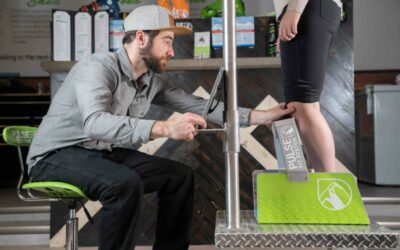
Any serious attempt at bootfitting begins with an assessment of the customer’s feet and lower legs. This appraisal can be as superficial as measuring each foot for length or as detailed as a complete skier profile accompanied by a few basic biomechanical evaluations.
Better bootfitters gather further information from a litany of details that lie outside the scope of the usual foot-measuring device, such as a Brannock. The veteran bootfitter watches how the customer walks, sits and assumes a skiing position, for starters. The savvy fitter can even spot limb-length differences and redistribute pressure around the foot in places no measuring stick can quantify.
If this sounds like a pretty sophisticated skill set, well, it is. Yet many, if not most, prospective boot buyers approach the bootfitting exercise with the same enthusiasm they usually reserve for a root canal. Suspicions are often confirmed when the first boot proffered seems crazily short. Even the most knowledgeable fitter is obliged to re-establish his/her credibility just to move the bootfit process pass square one.
Of Podcasts, Archives & Revelations
According to my tight-knit circle of advisors, idolaters, sycophants and astrologers, I was made for this medium.
Of course, any garden-variety sycophant will whisper words of inspirational twaddle, but the faint note of sincerity I detect in the smarm-storm of platitudes meant to buck me up has proven sufficient to spur me to action. I quickly acquired a very professional looking microphone and a pop filter to knock down my fierce sibilants. To preserve my objectivity, I opted not to take any lessons, follow any tutorials or otherwise prepare myself for this venture. By the powers vested in me as the Pontiff of Powder, I declare myself to be, now and forever after, a podcaster.
I’ll give you a moment to recover.

The Making of a Skier, Chapter XI: Desperate Measures
When Head humanely, if rather brusquely, terminated my tenure in 2001, the ski business in the U.S. was already facing stiff headwinds, a brewing storm that would turn into a full-on debacle when 9/11 disrupted all commerce. I became unemployed just in time for the job market to implode.
I don’t handle inactivity well. I started writing a very long, very dreadful novel, composed a handful of scripts for Warren Miller – and later, Jeremy Bloom – to recite and scribbled batches of brochure copy and white papers for industries as diverse as accounting software, instrumented football helmets that registered concussions and risk assessment based on location.
The pickings were slim, but they wouldn’t have amounted to anything at all were it not for a little help from my friends. Andy Bigford, who I’d worked with at Snow Country, hired me for the Warren Miller gig. A college chum kindly engaged me to write white papers on accounting fraud. But it was Dave Bertoni, an erstwhile colleague from Salomon days, who joined me in creating Desperate Measures: A Training Method for Selling Technical Products at Retail.
