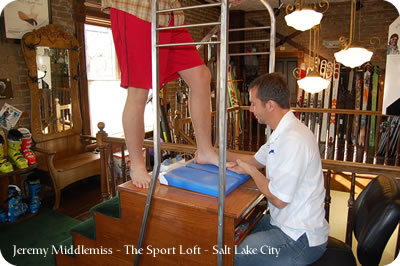

With every new ski season, I’m treated to a parade of pedal extremities, a fresh flotilla of feet, a bonanza of bony protuberances and collapsed arches. That’s right, I actually look forward to the next lost soul who has found his or her way to my boot bench.
I want to hear the tales of woe and loss; how the tragic, 15-year arc of an affair with the last, lamented pair of boots began in passionate, close-fitting ardor before, over time, you grew apart.
Yet I never depend on—and on some occasions, entirely discount—a customer’s self-assessment. For example, a customer might kick off our session with the helpful advice that he or she is a size eight. I realize these good people aren’t trying to deliberately deceive me, but as a starting point, “size eight” leaves a lot to be desired. Boots aren’t made on the American sizing system, nor the European sizing system or any other shoe-sizing method.
Alpine ski boots all follow their own metric, or mondopoint, sizing method that was created in order to reduce the number of shell sizes needed to cover a full adult size run. To add to the fun and confusion, the metric system doesn’t change shells, or much of anything else, to create half-sizes, but the boots are marked as though half-sizes were meaningful increments. Yet most manufacturers merely insert a thinner insole to turn a 27.0 into a 27.5. Ergo, sane ski shops stock full sizes or half sizes, but never both.
The silver lining to the boot world’s decision to veer away from shoe sizing is that all customers need to have their feet measured, like it or not. Once shoes come off, the veil of deception begins to fall away; all that remains between me and an accurate assessment of the customer’s needs is a pair of socks that most likely are unsuitable for the exercise at hand. When the socks come off, it’s time to get down to business.
Two types of boot customers reveal themselves. Type A points proudly to his or her greatest deformity and declares something along the lines of, “Bet you’ve never seen an ankle like that!” Type B is happily unaware that their feet are crumbling beneath them, despite myriad symptoms that point to a lifetime of neglect. Both types need help, but they may not need the same sort of help.
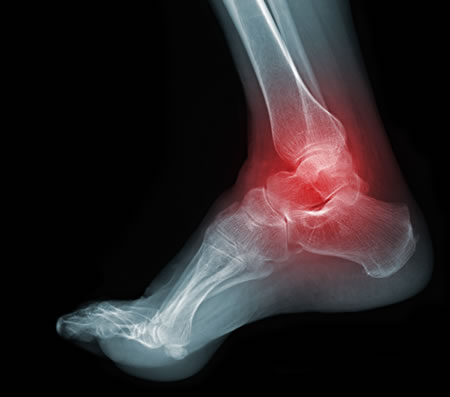
The problem for Type A’s is that their last bootfitter, and most likely every bootfitter they’ve seen since the dawn of time, has done all sorts of clever things to fit the one glaring abnormality and let the rest of the fit fall where it may. All very well intentioned, I’m sure, but backwards. The foot, ankle and lower leg need to be captured and held securely, then a nest can be built to house the freakish feature of which the customer has grown so proud.
The issue with Type B’s is they usually have been wearing non-supportive footwear for years and their battered feet have been working overtime trying to hold their bodies upright. Their sagging ankles, elongated toes and obliterated arches can’t find comfort in the correctly sized shell so they end up being oversized. The result is a bad fit and bad performance. What these customers need is a custom-molded insole and perhaps some other stance and/or fit accommodations in the right-sized shell and their skiing will improve instantly.
Feet don’t lie. Their shape and posture reveal all a good bootfitter needs to know to match someone to the right shell architecture and the right size. But there’s one other aspect of the skier and corresponding boot attribute to consider, and that’s the skier’s ability to flex the upper cuff. It’s common to correlate this capacity to ability, but more than just skier skill level is in play. A rank beginner with a background in balance sports and naturally high kinesthetic awareness will fold a beginner-class boot like an old wallet. Given half a chance, athletes can progress very quickly as skiers, but they’ll be chained to the bunny hill if they’re saddled with a flimsy shell they can squash like a bug.
A customer once chided me, correctly, I hasten to interject, for sallying off in search of a boot without inquiring into the subject’s ski ability. I’d read his foot, his stance, his posture and his athleticism; what did I need to know his ability for? Of course I should have asked the question even if I opted to ignore the answer, but the point of this vignette is that skiers’ objective self-assessment capacities are often so flawed they do more to cloud than clarify. The movie running in people’s heads while they ski usually bears scant relation to reality, rendering their auto-appraisals suspect.
On the boot bench, an athlete announces himself or herself without having to say a word. They know how to move through the world and they know instantly how to flex a boot. An athlete with a tall tibia has enough leverage to pleat a 130-flex boot like an accordion, but someone of the same skill level without the athletic aptitude won’t be able to budge it. Sorry to confirm what some of you reading this already knew: there’s such a thing as natural athletes and it’s a small club whose members are born into it. Happily for the rest of us, there are many gradations of athleticism, and all of the more adept have a higher potential for rapid advancement as long as their boots don’t hold them back.
Better boots make better skiers. No one’s life is improved by getting a lesser boot than they need. Yet one needn’t subscribe to every available embellishment to ski in comfort and control. While all feet like a measure of support, this doesn’t mean every skier needs a deluxe insole or an injected liner. But everyone is entitled to the benefits of an accurately sized and fitted boot.
And what boot should that be?
Ask your feet.
– Jackson Hogen