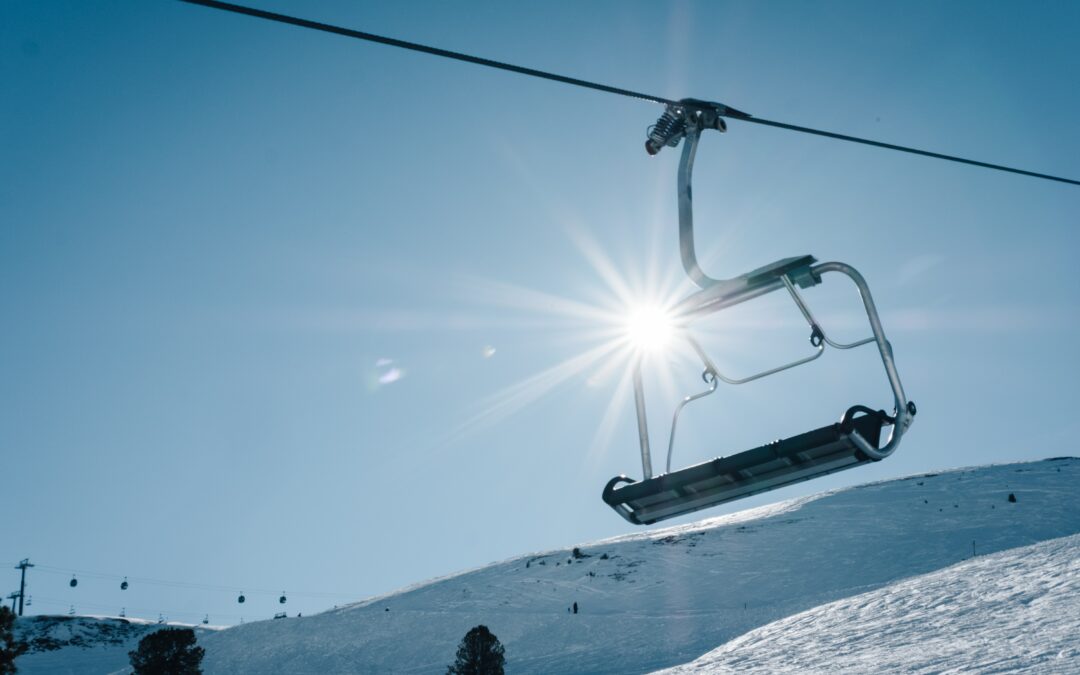

A Preview of What’s New for 2016
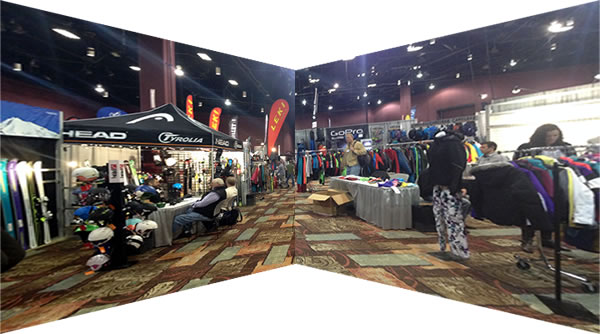
While major ski brands continue fighting fiercely to differentiate themselves, there’s one theme that pops up at some point in every company’s presentation of a 2016 collection: lighter is better.
In years past, the “lighter is better” message almost exclusively was applied to women’s skis, a trend that won’t fade anytime soon. For 2016, that tag is now also applied to a new generation of men’s models, even in macho categories like Big Mountain and All-Mountain West.
Just how a ski has been made lighter varies considerably from brand to brand and genre to genre. In many instances, metal laminates either are substantially pared down or eliminated all together. Wood cores likewise are whittled on, with thinner core profiles, lighter woods and cores that vary in composition and density edge-to-edge.
If a brand you know and love already has a lightweight story featured somewhere in its line, expect associated technologies to spread into new categories. The Old School notion that “lighter is better” applies only to women, children and the package market suddenly seems as dated as the long thong.
If there’s a hero material that is facilitating the LIB campaign, it’s carbon in one iteration or another. It may be deployed to lower swing weight, modify mass and pressure distribution or to selectively strengthen the ski. Wherever carbon is used, it’s not only lighter than whatever it replaces, it’s far tougher. For example, Graphene, carbon in its most elemental form, is 300 times stronger than steel.
Weight has become a front-and-center issue to the point that we at realskiers will incorporate weight per pair (for a given size) as part of our standard ski review format for 2016.
All this begs the question: If lighter is so much better, why haven’t brands focused on this feature for men’s all-mountain skis before now?
The answer lies partly in the influence of backcountry’s growth — where light weight is king — and in alpine ski design, and in that when brands in the past have offered lighter weight choices, the response among both trendsetters and the paying public has been the same as Oliver Twist’s: “Please sir, I’d like some more.”
Of course weight isn’t the only factor in ski design. We are lucky to live in an era when skis come in all manner of shapes and baselines. Manufacturers continue to explore ways they can modify how a ski meets the snow surface, adding camber here, subtracting it there, redefining tip shape, tamping down tail rockers and so on, all to improve the ski experience in every type of terrain imaginable.
Evolutionary changes—whether to shape or baseline or weight distribution—are in service of a common goal: making skiing easier and more fun no matter where or how well you ski.
There has never been available such an abundance of possible sensations while gliding down a hill as there are today—and tomorrow is looking even better.
– Jackson Hogen