
When I first raised the topic of composing a weekly newsletter with Realskiers.com founder Peter Keelty, he coughed, bit down on the Salem that was forever dangling from his lips and curtly advised me that I would run out of topics in a month.
This will be the 332nd Revelation I’ve posted since Keelty dismissed the idea back in 2013.
One could be forgiven for supposing that much of this cobweb-covered content has outlived its usefulness, but having recently revisited all of them, I’d surmise that the vast majority have at least some measure of relevance and most could be re-posted today. To drive this point home, the Realskiers home page will henceforth feature a fresh-albeit-former Revelation every week.
To make navigation through this trove less cumbersome, I’ve created 22 topics that bundle like-minded essays so subscribers can search by subject matter. (Please note that access to the Revelations Archive is a Realskiers’ subscriber benefit.) Topics include such predictable fare as Boot Buying Advice, most of the chapters of Snowbird Secrets and, of course, Ski Buying Advice. But there is also an array of musings on such disparate subjects as ski technique, the death of ski journalism and installments of my personal skiing odyssey, The Making of a Skier.
So, what do we learn about today’s ski gear market by examining the minutia of the last decade or so? That on a fundamental level, very little has changed. All skis are made of essentially the same stuff, only a ratio here and there has changed to provide just enough differentiation to allow all brands to claim their concoction is the best. Brands can only make what their factories are set up to make. An apt comparison would be the world of fine cooking: everyone has access to the same ingredients, and once they procure their hardware, they are limited to what that hardware (e.g., ovens, sundry cooking tools) is able to make. Nobody has a monopoly on any essential ingredients, be they basics like eggs and flour, or exotica like oysters or Kobe beef.
Trendlines
As we pick through the recent past, a few trends emerge that appear to have legs. From a PR standpoint, the most attention-grabbing arena concerns converting the ski gear lifecycle into a more eco-friendly process. Ski making in particular has always been a messy business, but factories have been gradually cleaning up their act, an evolution that began decades ago with the adoption of sublimation in lieu of silk-screening for decorating topskins. Today the emphasis is on using more recycled materials and devising a means of corralling skis at the end of their useful life rather than adding them to the world’s landfills. It bears noting that there are no short-cut solutions in the recycling initiative, so skiing’s collective efforts in this department will continue to be newsworthy.
The pandemic left a deep sitzmark in the ski trade, shutting down the 2020 season in a single stroke before reversing field and turbo-charging the in-resort ski business while sending the sales of Alpine Touring (AT) gear into the stratosphere. An entire genre of hybrid boots emerged, populated mostly with alpine designs with a “hike mode.” The bulge in equipment sales ending up creating a clog in the inventory pipeline that would take the better part of three seasons to clear. There must be a quarter-million pairs of nearly new touring skis (and attendant accoutrements) clogging ski lockers across America, the residue of the discovery that skinning uphill for hours on end is hard.
Another arena with a curious path to its current state of affairs is the women’s market. One of the fun facts about the last decade is that the number one selling ski in the U.S.A. was a women’s model, Blizzard’s Black Pearl, a ski originally conceived as a copy of the brand’s unisex ski that morphed into a genuinely “designed by women for women” model that has further evolved into a full-fledged family under the same Black Pearl moniker.
What the Pearl’s boffo success disguises is a market where most “women’s” models are the same as the men’s models, albeit with a different size range. The wider the model, the greater the likelihood that it’s the men’s version, which means that in the all-important All-Mountain East genre (home of the 85mm-94mm waist), for the most part, men’s and women’s models are all but indistinguishable.
While I would never presume to give equipment advice to the race community, any discussion of trends in alpine skiing has to include mention of the ever-widening gap between race gear and civilian set-ups. Once upon a time, there was only one avatar of skiing, and it was the racer, with a skill set a recreational skier could aspire to (if only feebly imitate). Now there is very little connective tissue between alpine racing and the in-resort ski experience. This isn’t perforce good or bad, it’s just where we find ourselves now, a more fragmented community.
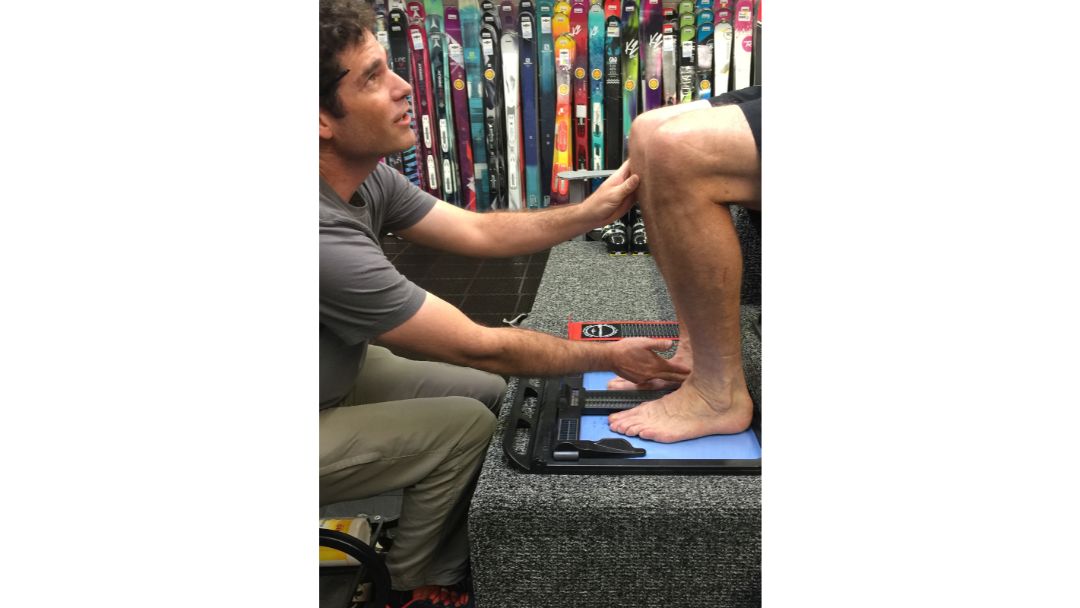
If one spends time perusing the 45 archived Revelations about boots and bootfitting, you’ll find that the advice on how a proper bootfit should proceed hasn’t changed. (See The First Five Minutes, posted October 18, 2016.) But over the course of the last two seasons, the BOA® internal cable system has replaced buckles – either in the forefoot, the cuff, or both – providing skiers of all abilities a choice in closure systems that didn’t exist three seasons ago.
The Realskiers Archives aren’t limited to deep reserves in the Revelations department; they also encompass five years of podcasts (Realskiers with Jackson Hogen) and hundreds of our renowned long-form ski reviews, sorted by season. It could be the curriculum for a master’s class in the evolution of the U.S. ski market.
It is my solemn duty to remind all my Dear Readers and Dear Listeners that first-time subscribers pay only $24.95 to open this vault of insights, and recurring subs are only $19.95. This modest fee includes the right to contact me directly with whatever gear queries you have, a service I feel confident in saying isn’t available anywhere else.

Related Articles
In Praise of the Wandering Mind
This subject has been percolating in the subterranean strata of my noggin for several months, searching for the connections that will lend it substance. The search for this topic’s handles has a wedding-cake’s worth layers: to depict the wandering mind requires its engagement, a self-cancelling concept that would oblige me to catch and release the idea in a Sisyphean quest to define its merits.
The notion of expounding on this Möbius strip of an idea was, naturally, an example of the wandering mind in action. I might have been noodling on a question several of my Dear Readers have posed, which can be distilled to, how did I ever learn to write in the manner that I do?
To find my answer, I had to relax my grip on the subject. My reasoning self was ready with mechanical answers, such as the discipline of writing every day. Duly noted, but insufficient. Let’s wander a little further.
Yard Sale! When Going Big Goes Wrong
If you’ve been a lifelong skier, you’ve not only experienced failure; most likely you’ve survived at least one miscalculation so soul-scarring, its time capsule is enshrined in the halls of memory alongside weddings and funerals.
As inspiration and prod to memory, allow me to recount a vignette from my days as a freestyle competitor. The location is Keystone, Colorado, the event, The Chicken of the Sea Freestyle Classic, a sponsorship coup that couldn’t have been too tough to land as Ralston Purina owned both the resort and the tuna.
I qualified via a preliminary aerial competition, taking a conservative tack by throwing a mule kick, hardly daring when going upside down was common. But my modest move was clean and hung out to dry, with a barely discernible, weightless pause at its apex.
The Best Women’s Skis of 2020
Before getting down to the business of picking favorites, let’s re-examine the fundamental question, what makes a ski a women’s ski?
Not to be flippant, but any ski its maker markets as a women’s model qualifies in that it will come in shorter lengths, which are scaled to match smaller people, a considerable percentage of which are women. To drive this point home, the women’s models will also be decorated in themes deemed – however correctly – to be more appealing to women.
