
When I first raised the topic of composing a weekly newsletter with Realskiers.com founder Peter Keelty, he coughed, bit down on the Salem that was forever dangling from his lips and curtly advised me that I would run out of topics in a month.
This will be the 332nd Revelation I’ve posted since Keelty dismissed the idea back in 2013.
One could be forgiven for supposing that much of this cobweb-covered content has outlived its usefulness, but having recently revisited all of them, I’d surmise that the vast majority have at least some measure of relevance and most could be re-posted today. To drive this point home, the Realskiers home page will henceforth feature a fresh-albeit-former Revelation every week.
To make navigation through this trove less cumbersome, I’ve created 22 topics that bundle like-minded essays so subscribers can search by subject matter. (Please note that access to the Revelations Archive is a Realskiers’ subscriber benefit.) Topics include such predictable fare as Boot Buying Advice, most of the chapters of Snowbird Secrets and, of course, Ski Buying Advice. But there is also an array of musings on such disparate subjects as ski technique, the death of ski journalism and installments of my personal skiing odyssey, The Making of a Skier.
So, what do we learn about today’s ski gear market by examining the minutia of the last decade or so? That on a fundamental level, very little has changed. All skis are made of essentially the same stuff, only a ratio here and there has changed to provide just enough differentiation to allow all brands to claim their concoction is the best. Brands can only make what their factories are set up to make. An apt comparison would be the world of fine cooking: everyone has access to the same ingredients, and once they procure their hardware, they are limited to what that hardware (e.g., ovens, sundry cooking tools) is able to make. Nobody has a monopoly on any essential ingredients, be they basics like eggs and flour, or exotica like oysters or Kobe beef.
Trendlines
As we pick through the recent past, a few trends emerge that appear to have legs. From a PR standpoint, the most attention-grabbing arena concerns converting the ski gear lifecycle into a more eco-friendly process. Ski making in particular has always been a messy business, but factories have been gradually cleaning up their act, an evolution that began decades ago with the adoption of sublimation in lieu of silk-screening for decorating topskins. Today the emphasis is on using more recycled materials and devising a means of corralling skis at the end of their useful life rather than adding them to the world’s landfills. It bears noting that there are no short-cut solutions in the recycling initiative, so skiing’s collective efforts in this department will continue to be newsworthy.
The pandemic left a deep sitzmark in the ski trade, shutting down the 2020 season in a single stroke before reversing field and turbo-charging the in-resort ski business while sending the sales of Alpine Touring (AT) gear into the stratosphere. An entire genre of hybrid boots emerged, populated mostly with alpine designs with a “hike mode.” The bulge in equipment sales ending up creating a clog in the inventory pipeline that would take the better part of three seasons to clear. There must be a quarter-million pairs of nearly new touring skis (and attendant accoutrements) clogging ski lockers across America, the residue of the discovery that skinning uphill for hours on end is hard.
Another arena with a curious path to its current state of affairs is the women’s market. One of the fun facts about the last decade is that the number one selling ski in the U.S.A. was a women’s model, Blizzard’s Black Pearl, a ski originally conceived as a copy of the brand’s unisex ski that morphed into a genuinely “designed by women for women” model that has further evolved into a full-fledged family under the same Black Pearl moniker.
What the Pearl’s boffo success disguises is a market where most “women’s” models are the same as the men’s models, albeit with a different size range. The wider the model, the greater the likelihood that it’s the men’s version, which means that in the all-important All-Mountain East genre (home of the 85mm-94mm waist), for the most part, men’s and women’s models are all but indistinguishable.
While I would never presume to give equipment advice to the race community, any discussion of trends in alpine skiing has to include mention of the ever-widening gap between race gear and civilian set-ups. Once upon a time, there was only one avatar of skiing, and it was the racer, with a skill set a recreational skier could aspire to (if only feebly imitate). Now there is very little connective tissue between alpine racing and the in-resort ski experience. This isn’t perforce good or bad, it’s just where we find ourselves now, a more fragmented community.
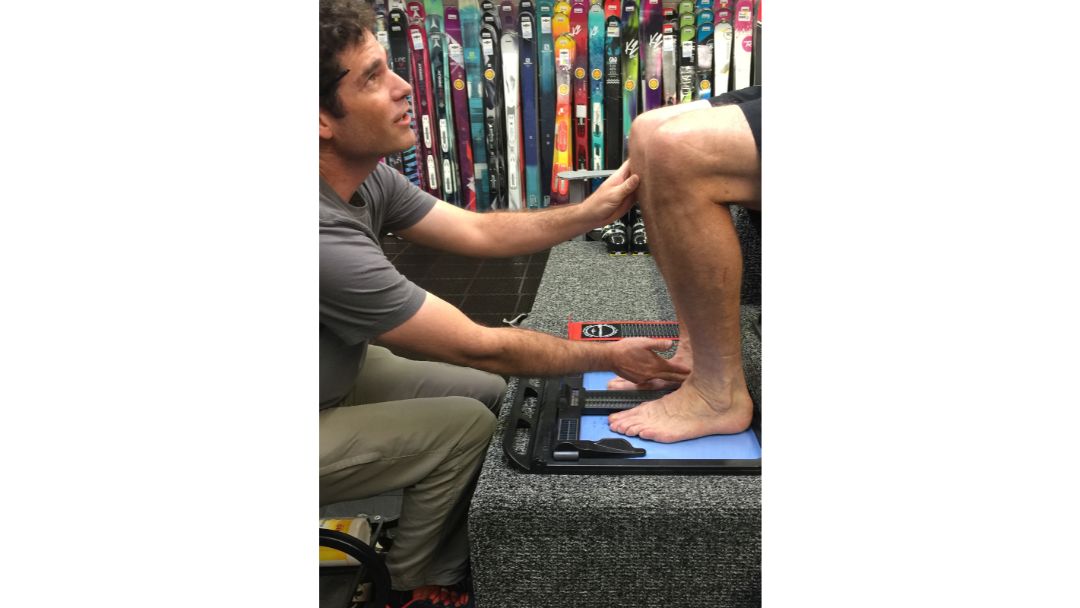
If one spends time perusing the 45 archived Revelations about boots and bootfitting, you’ll find that the advice on how a proper bootfit should proceed hasn’t changed. (See The First Five Minutes, posted October 18, 2016.) But over the course of the last two seasons, the BOA® internal cable system has replaced buckles – either in the forefoot, the cuff, or both – providing skiers of all abilities a choice in closure systems that didn’t exist three seasons ago.
The Realskiers Archives aren’t limited to deep reserves in the Revelations department; they also encompass five years of podcasts (Realskiers with Jackson Hogen) and hundreds of our renowned long-form ski reviews, sorted by season. It could be the curriculum for a master’s class in the evolution of the U.S. ski market.
It is my solemn duty to remind all my Dear Readers and Dear Listeners that first-time subscribers pay only $24.95 to open this vault of insights, and recurring subs are only $19.95. This modest fee includes the right to contact me directly with whatever gear queries you have, a service I feel confident in saying isn’t available anywhere else.

Related Articles
Is 3D Imaging a Fad or the Future?
Any serious attempt at bootfitting begins with an assessment of the customer’s feet and lower legs. This appraisal can be as superficial as measuring each foot for length or as detailed as a complete skier profile accompanied by a few basic biomechanical evaluations.
Better bootfitters gather further information from a litany of details that lie outside the scope of the usual foot-measuring device, such as a Brannock. The veteran bootfitter watches how the customer walks, sits and assumes a skiing position, for starters. The savvy fitter can even spot limb-length differences and redistribute pressure around the foot in places no measuring stick can quantify.
If this sounds like a pretty sophisticated skill set, well, it is. Yet many, if not most, prospective boot buyers approach the bootfitting exercise with the same enthusiasm they usually reserve for a root canal. Suspicions are often confirmed when the first boot proffered seems crazily short. Even the most knowledgeable fitter is obliged to re-establish his/her credibility just to move the bootfit process pass square one.
Of Podcasts, Archives & Revelations
According to my tight-knit circle of advisors, idolaters, sycophants and astrologers, I was made for this medium.
Of course, any garden-variety sycophant will whisper words of inspirational twaddle, but the faint note of sincerity I detect in the smarm-storm of platitudes meant to buck me up has proven sufficient to spur me to action. I quickly acquired a very professional looking microphone and a pop filter to knock down my fierce sibilants. To preserve my objectivity, I opted not to take any lessons, follow any tutorials or otherwise prepare myself for this venture. By the powers vested in me as the Pontiff of Powder, I declare myself to be, now and forever after, a podcaster.
I’ll give you a moment to recover.

The Making of a Skier, Chapter XI: Desperate Measures
When Head humanely, if rather brusquely, terminated my tenure in 2001, the ski business in the U.S. was already facing stiff headwinds, a brewing storm that would turn into a full-on debacle when 9/11 disrupted all commerce. I became unemployed just in time for the job market to implode.
I don’t handle inactivity well. I started writing a very long, very dreadful novel, composed a handful of scripts for Warren Miller – and later, Jeremy Bloom – to recite and scribbled batches of brochure copy and white papers for industries as diverse as accounting software, instrumented football helmets that registered concussions and risk assessment based on location.
The pickings were slim, but they wouldn’t have amounted to anything at all were it not for a little help from my friends. Andy Bigford, who I’d worked with at Snow Country, hired me for the Warren Miller gig. A college chum kindly engaged me to write white papers on accounting fraud. But it was Dave Bertoni, an erstwhile colleague from Salomon days, who joined me in creating Desperate Measures: A Training Method for Selling Technical Products at Retail.
