

Wherever there’s snow on the ground, the frenzy has started. Last season, the U.S. ski market hit high-water marks in every metric, and this vast horde of skiers, be they recent converts or grizzled veterans, can’t wait to get back on snow. A large contingent of them will soon descend on America’s specialty ski shops, seeking to upgrade their gear and thereby raise their game.
Every fall, new boot sales are driven primarily by the souring of a boot-skier relationship that has often been on the skids for several seasons. My informal survey of the skiers who have sat before me suggests that many skiers prefer to ski in unrelenting pain rather than suffer through another bootfit session that’s doomed to eventually disappoint.
I mention this curious phenomenon in the hopes that some of you might break off your bad relationships before they get seriously soul-scarring, and take a chance on a new partner for your feet. To find the best possible link between you and your skis, you need a professional counselor, known in our arcane trade as a bootfitter. DO NOT TRY TO FIGURE OUT WHICH IS YOUR BEST POSSIBLE BOOT BY YOURSELF. There’s no way you can do this at a distance, and Lord knows wading through the ocean of promotional blather that decorates everyone’s brochure won’t make you one drop smarter.
While there’s really no point in educating yourself about every boot extant, as the range of boots that will actually work for you is likely to be quite small, there’s one area is which your knowledge is both immensely valuable and uniquely your own. You’re the world’s greatest expert about your own feet.
Every foot has a history, so unique it may not even be shared by its fellow foot. Just last week, I was called into Bobo’s to help with a skier who was radically asymmetric, with one perfectly normal appendage and the other foot super-supinated into a high, rigid arch. The subject in this case showed considerable ingenuity in his attempts to override the arch support crafted by his podiatrist. When I reached under the professionally made insole, I unearthed a six-layer stack of homemade strips of foam and heavens knows what else that tilted the foot in the opposite direction promoted by the podiatrist’s device, in an innovative attempt to ride a flat ski. (The French have a wonderful word for this sort of jerry-rigged solution, bricolage; but I digress.)
The reason I mention this anecdote is it contains several nuggets worth remembering. The first is that our subject in this instance has a clear understanding of his problem and a sound rationale for how to address it. If the execution left something to be desired, his full disclosure about his history will contribute mightily to finding a better solution.
Our second instructive insight is that he waited too long to seek the help of a bootfitter. By the time he was introducing a third pancake to his underfoot stack, some alarm bells ought to have rung. I doubt William of Ockham was a bootfitter, but his dictum that one ought not unnecessarily multiply entities – commonly reduced to, “simplest solutions are best” – pertains in spades to our craft.
I don’t want to dismiss all attempts at home remedies, but the average citizen simply doesn’t have the tools or training to either pick the right shell or further modify it to maximize its virtues. Not all bootfitters do either, unfortunately, so put your searching efforts into finding the best bootfitter you can where you live or ski. Jackson’s List, on Realskiers.com, is a good place to start, but be advised top talent comes and goes, so who’s doing the best job can change from season to season. Another quality resource is boofitters.com. America’s Best Bootfitters has the most qualified boot testers in the country, and its model-by-model reviews are so spot-on, I link all my boot coverage to its content.
See your Feet from the Bootfitter’s POV
The more you understand about your feet, the more you can help your bootfitter diagnose your needs. Since most people spend as little time as possible trying to fathom the peculiarities of their feet, let me provide a snapshot of what I’m thinking about as I peruse your bare tootsies.
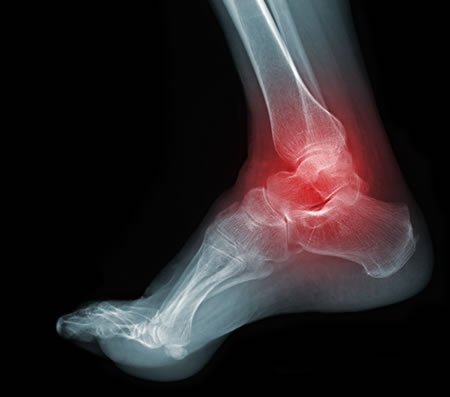
First, I look at the foundation. How high is the arch, how long is it and perhaps most importantly, how flexible is it? Is there any history of plantar fasciitis? Do your feet naturally abduct when you sit down? What sort of a platform are you standing on, and how can I benignly affect it? What is your ankle range of motion, and how well can you plantarflex? Will your instep be slammed against the roof or lie below the shell’s radar?
Of course, I’ll measure each foot for length, seated and standing, and measure the heel-instep perimeter to see how it compares to the length. How much these two distances differ can affect shell selection.
As I eyeball all that will be encapsulated inside a ski boot, I note how the foot and lower leg volume changes as I move from the forefoot to the instep, back to the critical heel area and up the calf. As the goal is to always prioritize the fit in the heel and ankle area, I’ll look for a shell that matches these dimensions, knowing it’s easier to change the calf flare and/or forefoot volume than re-work the paramount rear-foot.
What I hope my Dear Readers retain from my standard inspection protocol is that I want to know all I can about what your feet have been through. There may be a prior history of trauma that explains certain limitations the bootfitter will have to accommodate. I’ll want to know about any surgeries, particularly if they’re recent or involve any fused joints. Other hidden problems can include neuromas, a limb-length difference or poor circulation. The more you share, the better the ensuing results.
I know it’s asking a lot to put your faith in what I admit is a fallible process. The point of this pithy Revelation is that self-awareness provides at least some defense against faux expertise; the more you know about your feet and what feels right to them, the better your bad-advice radar. It’s unrealistic to expect skiers – even expert skiers – to know how each model of boot fits and performs, particularly since models can change significantly from year to year. But all skiers should be able to provide feedback to a professional bootfitter about the life their feet have led, and what they’ve learned along the way.
By the way, if you receive extraordinary service from your bootfitter, don’t be shy about showing it. No one is paid a king’s ransom in this trade, and the work requires real artisanship. It’s the holidays. Ask yourself, what would Santa do? He’d tip, that’s what he’d do.

Related Articles

Road Tripping
Among the many dissatisfactions of this most unusual season is that travel beyond one’s local environs has been roundly discouraged. Don’t get me wrong: I’m grateful down to my socks that we’re allowed to ski locally, and my version of same is pretty sweet. Pardon the plug, but between Alpine Meadows, Squaw Valley and Mt. Rose I have a smorgasbord of savory choices.
But skiing close to home and skiing on the road are two different beasts. Nothing is the same, really, and therein lies a great deal of the road trip’s charms.
To shed light on my premise, allow me to pull back the veil on my favorite away game, an annual pilgrimage to Little Cottonwood Canyon. By the end of this brief travelogue you will probably hate me, so please fill your vessel of good will to the rim before proceeding.
It’s About Nothing
In the last week of January,2009 I was able to spend a few days skiing in Little Cottonwood Canyon, which is always cathartic for my ravaged soul. The conditions were all over the map, the mountains having experienced a long, hot spell followed by rain, grapple, wet snow and finally dry snow driven by winds that could flense an adult walrus in a few minutes. Couldn’t have been better.
I had been preparing for the trip for weeks, psychologically. Two back surgeries the previous winter had reduced my training regimen from semi-annual to non-existent. Scheduling conflicts such as work kept me from visiting the areas that abound at home near Lake Tahoe, so I had zero ski days on a body with more fat on it than a French duck. I had as much chance of surviving Snowbird and Alta as a rib roast in a piranha tank.
Fortunately, the Lord is merciful, anti-inflammatory drugs are powerful and there are techniques that allow one to block out pain. There are also many wonderful people in this world with which to ski, kind people who stand quietly by, pretending to be in awe of Nature, while my chest heaves so violently in its futile quest for oxygen that tiny lung particles break lose and make for the exits. One such person is Guru Dave Powers, a man whose passion for the sport hasn’t diminished after thousands of days of riding gravity down the infinitely variable slopes and crannies of Snowbird. The Goo knows this hill, and in knowing it well knows so much more.
The Making of a Skier, Chapter XII: Putting Words into the Mouth of God & Other Mid-Life Adventures
When I was cut adrift by Head on June 13, 2001, my once glowing prospects dimmed considerably. The date is etched in memory because I hosted a small soirée that evening in honor of my darling wife’s 50th birthday. One of the attendees was Paul Hochman, who would play several roles in my life as I wandered in the wilderness of unemployment during what were supposed to be my peak earning years.
During the gaping hole in my career that spanned 2001-2011, I would eventually spend every cent of my inheritance, plus most of what I’d saved from earlier bouts with gainful employment, just keeping the household afloat. Despite a river of red ink, my resume would suggest that I was not only commercially active during this epoch, but had my hand in all sorts of ventures.
