
Skiing isn’t for the faint of heart.
Neither is subjecting oneself to what is coyly referred to as “America’s Health Care System.” Hold that thought while I elaborate on point one, that a lifetime devoted to skiing is hard to navigate without occasionally experiencing a consequential impact with the planet or some other immovable object attached to it. If you ski long enough, you will eventually learn the meaning of terms like “laminectomy” and “stenosis.” If you don’t know these terms yet, please bear with me while I bring you quickly up to speed with those who know them all too well.
As far as I know, there wasn’t any one big crash that led me to my first laminectomy. It was the accumulated stress of thousands of reckless bump runs that eventually caused L4/L5 to collapse, releasing its gooey contents into the surrounding spinal column. Just to remind you that all is not well in your lower back, the rogue material sends out signals that make walking difficult and golf excruciating. It takes a few months of this torture to qualify for an MRI which makes the problem impossible to miss.
Even though my back surgeon was reputably the best in Reno, he botched the first operation, inexplicably leaving a large mass of roving goo to wrap itself around my spine, mandating (after a couple of months of eye-watering agony) a second procedure that removed the remaining loose lubricant and rendered me uninsurable when I lost my job and its attendant medical coverage. Gotta love a “system” that kicks anyone to the curb for having the audacity to use it.
My second major spinal injury wasn’t induced by sustained abuse of my lumbar region, but by a single bad decision that nearly broke my neck. It was early in a low-snow year, first run of the day off KT-22. I was checking the tune on Head skis I’d brought to an industry event, planning to run laps until I’d checked out the lot of them. I didn’t make it past ski one, which happened to be a Non-FIS GS race model, so I wasn’t poking my way downhill. As I approached the base area, I took a wide turn, going slightly outside the narrow ribbon of groomage, my eyes fixed on the KT lift where I planned to switch skis.
I never made it that far, for unbeknownst to me the trail was only lightly dusted with snow, so when I went right, I steered into a long pit of barely covered rocks. Both skis were ripped violently off my boots and I was fired forward in a low-trajectory arc. Some instinct reminded me to get my chin up before I used my face as a brake pad. (The skis, BTW, did not survive this event.) As I spun slowly to a stop, it seemed my only serious injury was to my dignity, but I would later discover I had damaged C2/C3 rather nastily. Eventually, I got an epidural injection that magically reduced the swelling in my neck in the time it took me to swing my legs over the side of the operating table. (Best medical intervention ever.) But of course, C2/C3 would never be quite the same.
Flash forward a couple of decades to this past season, and my old spinal injuries began to re-surface. The first manifestation was stiffness in my neck, such that I could only turn my head to the right. Big deal, I could cope with that. What I failed to realize was the pain in my neck was disguising a bigger problem in my old lumbar injury. When most of what made L4/L5 a functioning shock absorber was removed, it left L3/L4 to do the work of two, wearing it down to the nubs. Sometime during my last of round of golf, it quit.
It did not go quietly. To make sure I didn’t ignore it any longer, it shifted relative to its neighbor, grinding any remaining nerves in what was already a narrow canal into an angry, noisy pulp. To help you visualize the narrowing of the spinal pathway my nerves were dealing with, imagine The Three Stooges all trying to get through a doorway at the same time. That’s stenosis.
My pain specialist suggested ablation, a barbaric technique that kills the pain messenger rather than addressing the root problem. To prepare the patient for what will be a brutal series of nerve-killing injections, a local anesthesia is injected first, an exercise in applied agony apparently meant to tenderize the patient before sending in the nerve-killing crew.
I’m making it sound better than it actually was. But the ablation turned out to have two benefits: first and perhaps foremost, it allowed me to lay still in an MRI tube the following day, which I probably wouldn’t have managed without it. The second benefit took a while to take effect, but as I sit here at my keyboard, I’m grateful for the relative calm in the storm that continues to rage in my lumbar region.
You see, for the month between the onset of the vertebral displacement and the ablation, the remains of my lumbar region sent out distress signals at every opportunity. The electrical storm in my back would fire off salvo after salvo of biomechanically sourced lightning at a pain level that was not easily disguised. Not only did I shuffle about like an arthritic Quasimodo, the party in my back would occasionally fire off a suite of violent shocks, accompanied by verbalizations that went something like, “Ow, fuck, oh shit, JESUS H. CHRIST! oh, oh, oh, oh, FUCK ME NAKED! OW, OW, OW!” On the third “OW!,” my knees would buckle and I’d have to grab whatever was nearest to keep from hitting the floor. (My cat, Oscar Wilde, kept his distance during these outbreaks. Smart kitty.)
Once medial professionals began mucking around in my back, they found all sorts of possible ailments to help keep me awake at night. I had a CT scan of my chest and abdomen, along with a bone marrow biopsy (super fun!), because some savant thought he saw perhaps some incipient cancer growing in my back. (This diagnosis has since been relegated to a back burner due to a lack of supporting evidence.) I’ve had enough blood drawn to sate an extended family of vampires, and every inch of me scanned by one device or another. After a day and half in the hospital and more tests than I took at Yale, the verdict was, I’m fine.
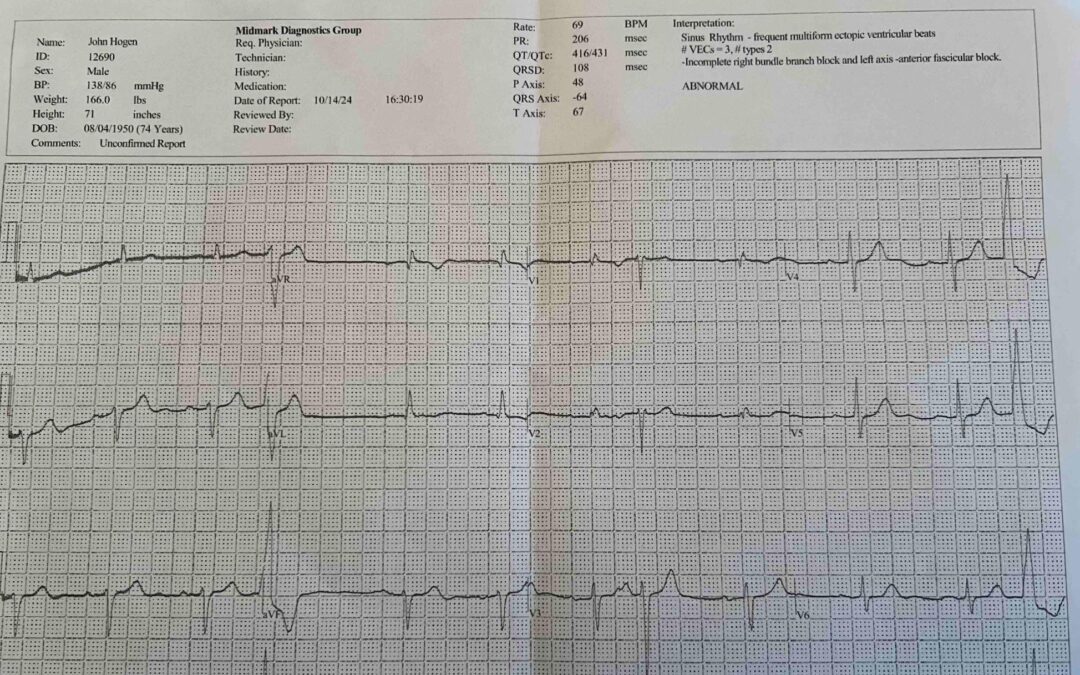
I still had to see a heart specialist because of a slight abnormality in my EKG which concerned my primary care physician, who wouldn’t give me clearance for my back operation without yet another specialist’s okay. I finally got said clearance last Friday, which now goes back up the chain to my primary and thence to the back surgeon. I hope to finally get on his docket next week and on his operating table some time shortly thereafter.
The perspicacious Dear Reader may well wonder how I ended up diverted to the hospital when my objective was simply to schedule a minimally invasive (their words, not mine) back surgery. That was my doing. I was wandering my yard when I began to feel woozy, as if a fog had settled on my brain. I couldn’t figure out why I was feeling so oddly disconnected and whatever my condition was, it was worsening. I didn’t want to pass out on the lawn, leaving my 100-pound wife to cope with my unresponsive body. So, I called 911 and was duly delivered into the medical-care machinery.
As noted above, I was checked for everything imaginable and emerged with a clean bill of health. Yet as I was being wheeled to the curb, I couldn’t suppress the sensation that something still wasn’t quite right. It wasn’t until later in the day that I finally connected all the dots. The reason I checked out as A-Okay and yet still felt weirdly dizzy was that my problem was one of the few conditions I wasn’t tested for: I was constipated, which sent my vasovagal system into distress mode, causing syncope, a fancy term for feeling faint. This was the condition that knocked me unconscious while I was driving home from a ski day in the spring of 2012; I was keeping my butt clenched to prevent any sort of loose discharge occurring in my wife’s car, to the point where I blacked out. While I didn’t black out on this occasion, it explains why I didn’t feel right.
The moral of this story is that if you pass every test and still feel like crap on toast, maybe you aren’t being tested for what ails you.
The point of this story is that surgery and a little recovery time will prevent me from maintaining my usually prodigious publication schedule of Revelations and podcasts. I will still be able to answer subscriber queries about equipment and hope to attend the upcoming Masterfit University sessions in Reno, with a by-appointment-only bootfitting session slipped into the mix for good measure. Stu Winchester, of Storm Skiing Journal fame, has also invited me to a guest appearance on one of his upcoming podcasts, so my Dear Listeners have that to look forward to.
Please accept my apologies for this overly long excuse for my impending absence from your in-boxes. I shall be back as soon as I get medical clearance.

Related Articles
In Memorium, Carl Ettlinger
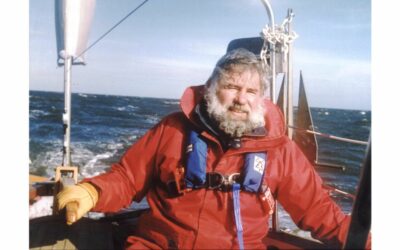
Carl was a giant of a man whose outsized voice roiled every conversation like a burst dam and whose expansive vision reached across the mixed milieus of research, journalism, risk management and education. I knew him when he was at the peak of his powers, as he explained to me when I interviewed him for a “where are they now?” profile in Skiing History. He was able to conduct long-term research on injury patterns as well as analyze the particulars of the current binding market, turn around and package this knowledge into articles for Skiing and Skiing Trade News, followed up by a workshop tour that would bring enlightenment to the grassroots level. No one but Carl could have pulled this off, and Lord knows no one has had the requisite talent, energy and will power since.
But time and tide wait for no man, and Carl’s finely spun web of influence was eventually plucked apart. The loss of his pivotal positions in the press allowed him to slip from public view before we, the skiers of the world, realized we hadn’t taken the time to thank him.
We have the time to thank him now.
So thanks, Carl, for being first and foremost a teacher, for teaching is at the heart of the evangel’s mission.
Thanks for being so damn stubborn. Your insistence on improving skier safety wore through a wall of resistance as tough as Vermont marble.
Thanks for having a heart as big as that melon-sized head of yours. The fuel to your tireless mind was a caring heart that tried to embrace the world.
Thanks for all the stories once the Mount Gay flowed. Who knew we would have won the Vietnam War if only his superiors had listened? I can’t remember exactly how – he wasn’t the only one drinking Mount Gay – but I recall the light in his eyes as he relayed his twisted tales, taking us down successive rabbit-holes of digression that I lost track of at the seventh level.
That’s what I remember most vividly about my many interactions with Carl: his brain so teemed with thoughts he rushed to get them out in a verbal jailbreak that would travel around the cosmos until returning, many lost minutes later, to the subject that had inspired them. That was Carl: too many words for one sentence, too many tasks to tend to and all of it, every erg of his endless energy, devoted to a cause he never ceased to serve.
Fare thee well, Carl Ettlinger. The world misses you already for it will never see another quite like you, whose every moment seemed larger than life itself.
I raise my glass to you, old friend. Mount Gay, of course.
Jackson Hogen
June 23, 2020
Why This Buyer’s Guide?
Don’t read the 2021 Masterfit Buyer’s Guide in Partnership with Realskiers.com for its 62 ski reviews. I should know. I wrote or edited all of them.
Not that the ski reviews aren’t worth the read. But ski reviews on the web are as common as rice, while the Buyer’s Guide contains something no other publication, whether in digital, print or video format, can claim: the most respected, thorough and dependable boot reviews in the world.
This isn’t mere puffery. The Masterfit Boot Test is so well regarded by the supplier community that nearly every brand not only sends its following year’s line-up in four men’s sizes plus three for women, it also dispatches its top designers and/or product managers to a distant North American site for most of the test’s five-day duration.
The Ripple Effect
As I’ve observed in this space before, product managers spend most of their time in the future; the present for them is two years away for the rest of us. So when the coronavirus shut down the 19/20 ski season, it triggered an automatic response in the R&D lobes lodged deep in my noggin: what impact will this have two years down the road?
If I knew the answer to this question with any certainty, I should be running a hedge fund, not scribbling about skiing. But after checking with several of the bellwether players in U.S. market, I have some idea of what’s in store.
