
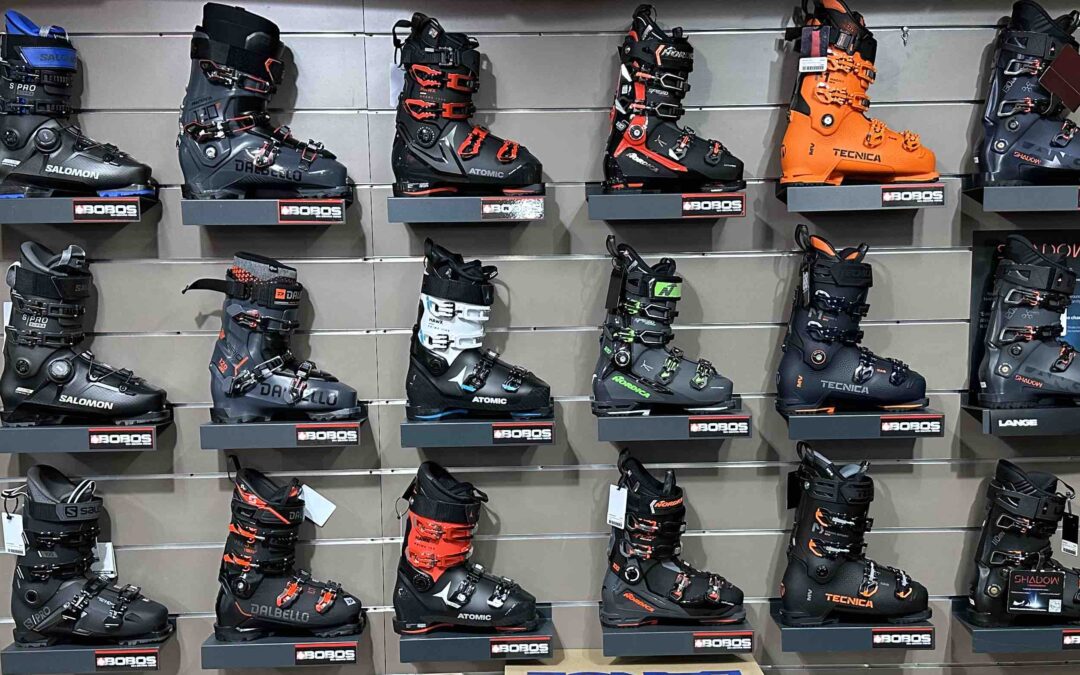
As far as I know, October isn’t “National Buy Your Ski Boots Now” Month, but it should be. Carryover stock will never be more abundant, and new models will still have a full range of sizes, which won’t be true forever. Perhaps most importantly, bootfitters are also in relatively strong supply, so with any luck the one waiting on you won’t be juggling three customers at once. It’s a perfect storm of abundance: values on last year’s models, selection on this year’s new arrivals and personalized service are all at their peak.
The following ever-relevant Revelation was first published as Lessons in Empathy on March 13, 2018.
Almost everyone who submits to the tender mercies of a bootfitter has a history, baggage of prior bouts on the boot bench that turned out poorly. If they wear a crust of mistrust before they bare their feet before a shiny new bootfitter, it’s because experience has taught them that no matter how well the boots seem to fit in the shop, they will transform into untamable hellions the first time they tread on snow.
To chip away at the mistrust crust, the bootfitter must demonstrate that this time, things will be better. He calls out every bone in the foot as he glides over it, caresses the configuration of the arch and puts the ankle through its paces. He contemplates the shape of the calf, the height of the instep and the angle formed by the row of metatarsals. He explains your case as if he were a dermatologist diagnosing an inexplicable rash you picked up on a cruise to Borneo.
The true test of the bootfitter’s perspicacity comes when the first trial boot appears. Before the customer’s tootsies are allowed to descend into the dark maw of the boot’s throat, he receives a litany of provisos and disclaimers not unlike those rattled off near the end every drug commercial on TV.
Your toe(s) will touch the end. Don’t panic. They’ll never be tighter than they are right now. We’ll warm them up later, then you’ll see I’m not lying. You’ll get used to turning your foot 90 degrees. That shooting pain on the outside of your foot? Don’t worry about it! I know your toe is at the end, but I wouldn’t call it “smushed.”
While the bootfitter is applying all this verbal Valium, the oft-abused boot-fittee is balancing on one foot, thinking, Why shouldn’t I panic? A life-before-my-eyes newsreel of old boots that killed my feet is unspooling in the memory storage shed. BTW, my foot isn’t moving, it’s trapped. I’m halfway in this bloody boot and it’s trying to ingest my instep, which is already cramping up as I drop in. The shooting pain you refer to is, or was, my pinky toe, whose hue is now moving through the spectrum of reds, on its way to ultra-violet. And, yes, since you ask, my big toe and whatever you called the one next to it are, I believe, permanently dislocated.
In the scrum between customer and bootfitter, third-party sympathies naturally side with the beleaguered customer. All the pain and suffering seem one-sided. As one who has spent many hours on the other side of this unequal equation, allow me to assure my readership that such is not the case. The myriad difficulties of fit diagnostics aside, bootfitters must wrestle with hard plastics and argumentative tools that shred flesh far more readily than they deform plastic.
Then there are the infinite mysteries of trying to figure out what, Dear Customer, you are all about. Feet present countless problems all on their own, magnified by the fact that they are at the base of a kinetic chain with issues at every junction between the foundation and the source of most intractable boot fit problems, the brain. As the author of your own skiing history, you leave out unflattering bits that would reveal volumes and replace them with self-assessments leavened with large doses of imagination.
The partners in the bootfitter/customer dance need to bring both head and heart to their relationship. Bootfitters have to explain to customers what they’re thinking, where they’re going with model and size selection and why. Customers need to provide detailed history and feedback and be as honest as they can about skills assessment and goals.
Pardon my veering down a side road, but it’s a source of amazement to this observer that practically every skier on the hill has at least one video camera on his or her person yet almost no one has footage to show a bootfitter that would illuminate his or her skill set. But I digress.
In the final analysis, bootfitting is hard on both parties, fitter and fittee alike. Feet weren’t made for ski boots and by all indications boots don’t seem made for feet. Of all the components that make up the modern ski/boot/binding system, boots could use the most re-imagining.
The relationship between bootfitter and skier could also use some re-imagining. For it to work, it has to be a collaboration based on mutual respect and dependent on communication skills. As pricing can be a deal-breaker, both sides would be well advised to put their negotiating chips on the table at the outset rather than leaving all discussion to a mutually unsatisfying conclusion.
The underlying secret to a great boot fit is the same as the secret solution to many of life’s challenges: approach it with an open mind and an open heart.

Related Articles
Reader Comments on Why Ski Sales Have Shrunk
In this week’s Revelation, I posted my top ten (twelve, actually) reasons why skis sales have shrunk, along with the musings of two Dear Readers on the subject. Note that the topic’s focus was ski sales at retail, not skier or skier/rider participation rates, subjects that are certainly related but just as certainly not the same.
Below are verbatim reader responses culled in the last 48 hours. I’ve corrected the odd typo, but otherwise left these contributions intact.
My thanks to all who took the time to tell their tales. – J
Top Reasons U.S. Ski Sales Have Shrunk
[As I wrapped up an earlier Revelation, I proposed to my beloved readership that they share their list of the top ten reasons U.S. ski sales have shrunk. I elicited only two written responses, so I’ll reproduce both here in their entirety, along with my musings on the subject. Consider these submissions tinder to light a fire under you, Dear Reader, to submit a list of your own.]
From Rick Pasturczak
1. Snowboarding-
I’ve noticed most snowboarders are 12 to 20 years old and once they become an adult, almost all stop. While I noticed most skiers continue on.
2. High school and college sports-
Schools now require practicing sports during Christmas and spring breaks taking away opportunities to hit the slopes and family vacations to the mountains. I’ve been told by many parents the coaches forbid them to ski.
3. Travel costs-
Lodging, airfare, ground transportation, and lift tickets.
4. Video games
5. Cost of lessons make it expensive to improve.
6. Confusing selection of equipment
7. Magazines and movies showing extreme skiing
8. Cruising. We need some resorts to be all inclusive.
9. Baggy pants. Bring back stretch pants and sex appeal.
10. Last, we need mother nature to be more consistent with snow.
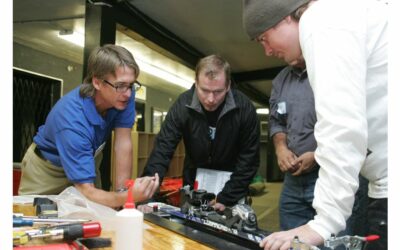
The Making of a Skier, Part X: The Mechanics & Managers Workshop Tour
When I left Salomon in the spring of 1987, my motivations could be distilled into three principal components:
• The parent company declared it was moving its Reno-based North American HQ back from whence it came. Neither I nor my family had the slightest desire to return to New England.
• I felt I was spending more energy battling factions within my own company than I was out-flanking our competition. I’d worked more or less without a break since June of 1978. My thin veneer of patience cracked.
• I wanted to write screenplays. Not that I had demonstrated any talent for creative writing or had any training in the field. I’d written reams of technical swill, brochure copy, training manuals and memos which created the illusion that I could at least write something, so why not screenplays?
Note that none of these factors involves finding a new job. At the time, I didn’t want to resume wearing the shackles of employment as they would interfere with my ludicrous screenwriting ambitions. Then the stock market went into a tailspin in October, crippling what little equity I’d managed to accrue on my minimalist salary. Oops.
