
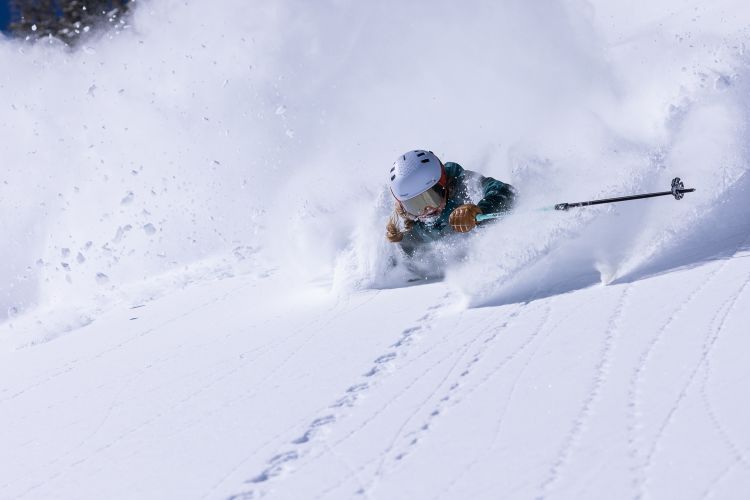

I’m an optimist by nature.
Try to keep this in mind as I air my misgivings about the future of American skiing.
As the thoughts I’m about to share were incubating, they started to coalesce around five points, all of which turned out to be more complex than I at first imagined. The signs of skiing’s demise as I first perceived them were:
- The end of snow. Water is certain to be in increasingly high demand for purposes other than recreation, which doesn’t bode well even for resorts with extensive snow-making operations.
- The end of the day pass. The price of a day pass is so high, the only purpose it serves is as a barrier to participation.
- Slope safety. Over-crowding on weekends and holidays puts too many skiers of mixed skills on the same slopes. Collisions are inevitable and often consequential.
- The closure of 100’s of small, feeder ski areas. Widespread participation requires widespread availability.
- The end of authenticity. Once upon a time, ski journalists did their homework. Now, every online publication – all we have anymore – shills for the equipment they review. No product is pitched without a way to buy it directly, without further ado – or informed advice.
Upon further review, I either mis-stated the nature of the problem or glossed over particulars that put a different spin on my perspective. Allow me to illuminate my serial foibles.
The end of snow. I identified the right issue with the right emphasis, but I failed to imagine a viable alternative. I underestimated the inventiveness of fixed-asset owners who won’t go down without a fight.
While it won’t be long before all resorts, regardless of altitude, will depend on snow-making – an eventuality they are well aware of – it’s possible to imagine a dystopia that results in a completely no-snow scenario. Should it come to that, resorts will resort to carpeting the hills. As you read this, artificial surfaces are already in use both indoors and out.
The end of the day pass. Boy, did I get this one wrong. Of course, I was right about day passes costing a lot more than they once did, a phenomenon I felt sent the wrong message to potential skiers. And I was right that higher prices discourage participation (duh), but I missed the main point: higher day pass prices are meant to limit casual participation, thereby reducing slope traffic that alienates the well-heeled customer the resort wants to cultivate. I thought it would be nice if the day pass rate went down; the reality is, given its profitability and continued popularity despite its inflated value, it’s far more likely day pass prices will go up.
If it sounds to you like we’re heading towards $200/day tickets that many potential skiers can’t afford, you’re right on the money. To put it another way, if you don’t earn $100,000 a year, you probably couldn’t afford to ski even if you had the time to do so, which you probably don’t.
Yet skiing participation is at an all-time high. Alterra, Epic and Indy Pass are all setting records for revenue. Resorts have zero incentive to discount day passes and two overriding reasons for raising them: limiting traffic at already bloated peak periods while raking in boatloads of dough.
Slope safety. As with my other conjectures, my worries about slope safety are well-founded, if somewhat misrepresented. In the mélange of skilled and unskilled skiers, it’s not the untrained, unsupervised and unpredictable beginners and intermediates who wreak havoc; rather, it’s the hell-bent-for-glory advanced skier who overtakes the initiates in his path. On groomed slopes especially, velocity can easily exceed the skier’s ability to manage it, and all it takes is one innocent meanderer in a dive-bomber’s path to cause a debilitating injury.
Nobody, regardless of skill level, likes to ski in a crowd. A great deal of disposable income takes care of the problem by leaving the riff-raff on the other side of gilded gates. If ski resort development has a future, it’s in the creation of ultra-exclusive hideaways where on-snow traffic won’t be a concern.
The closure of 100’s of small, feeder ski areas. Right idea, wrong decade. Yes, we’ve flushed 100’s of small ski areas out of the ski economy, but the damage was largely over and done with many seasons ago. What remains of small to mid-size resorts will most likely maintain their customer base (or, thanks to the Indy Pass, increase it), and maintain their snow coverage as long as they’ve invested in snow-making.
The end of authenticity. In keeping with my other “insights,” I was correct to note we’ve lost journalistic integrity as once practiced, but my disenchantment was too narrow in scope. We’re not just losing recognized expertise among those whose job it is to stay embedded in the sport and ahead of their readers, we’re losing a sense of the interconnectedness of all skiers.
We’ve broken into smaller and more focused sub-cultures that rarely communicate with each other. We don’t see the mountain we share the same way, and more and more of us are heading off into the backcountry, putting more distance, literally and metaphorically, between themselves and the in-resort crowd. We’re slowly but surely destroying the specialty shops that depend on ski sales to survive. If a ski is on sale online for $50 less than it sells in-store, you’d be dumb not to jump on the online deal, right? Soon specialty shops will be relegated to bootfitting and ski tuning, which only a handful may prove both willing and able to do.
Not so very long ago, we had a trade show that brought everyone together under one roof for an annual celebration of our communal commitment to the sport. Now we don’t even have that to comfort us as we plunge into a future with few consolations.
But I remain an optimist, forever dreaming of deep, silent snowfalls. My sunny suggestion for you, Dear Reader, is that you go skiing as early and as often as you can before you wake up to a world where the only surface left to ski is a synthetic carpet.

Related Articles
Just How Strange Will the 21/22 Ski Market Be?
To (temporarily) kowtow to the cult of brevity, the short answer is, “not very.”
To elaborate, most major ski brands didn’t derail the introduction of new products that were in the works well before the pandemic dropped the hammer. There’s a rhythm to the product renewal cycle that shifts the spotlight every year to a different model family within any brand’s global collection; that rhythm was largely respected despite the unique obstacles imposed on the process this year. If most of the models appearing in 21/22 catalogs seem similar to what was offered this year, it’s because this is how the line renewal machinery ordinarily operates.
What’s difficult to judge from outside the R&D pipeline is what we’re not seeing. That is, were there more new models or upgrades to existing star products ready to launch that were put on hold to avoid overloading a potentially weakened distribution network? Possibly; what might have been a planned six-model launch may have been trimmed to three or four, for example.
Happily, there’s no real downside to this scenario for the prospective ski buyer. All essential model family refreshing and line extensions will unfold as forecast. If you haven’t bought a ski in three or four years – I believe the average span between new ski purchases is over seven – the entire universe of Alpine skis is new to you. You may spot some names you recognize, but the skis that bear the name will almost assuredly be different.
“How Is It in The Bumps?”
This question is one of the last objections a ski buyer tosses into the flow of the sale just as the salesperson has guided it to the brink of consummation. To keep the impending close on course, the suave salesperson will hedge the issue with some bland reassurance without raising the obvious retort, that no ski can overcome all the many and curious ills that plague the untalented mogul skier.
A great skier can manage bumps no matter what ski he or she is on. That doesn’t mean experts don’t have favorite skis for this spine-rattling condition, but they don’t need to change skis just because they encounter a bump field. They’ll manage, and chances are anyone watching them won’t be able to tell if the ski is helping, hurting or just along for the ride.
To get the subject out of the way, there are such things as mogul skis, but they’re made for competitors, not your everyday, all-terrain skier. Their tiny (61mm-66mm) waists and svelte sidecuts were common 25 years ago, but they’re as rare as bacon at a bar mitzvah today. Unless you’re planning to compete, there’s no reason for you to fish in this pond.
The Savvy Shopper: How to Buy Skis
Let’s begin with a recap of the fundamentals.
Realskiers’ model selection methodology starts by dividing the Alpine ski market into seven categories, using waist width as the organizing principle for three excellent reasons:
1. This dimension is the single best indicator of the ski’s capabilities.
2. Waist width is a hard number, not a fuzzy concept like skier type.
3. Suppliers product lines align with this method, creating models in every category according a coherent pricing logic.
