

Of all the many splendid reasons for becoming a Realskiers.com subscriber, none is more unique – nor more valuable – than the opportunity membership confers to contact me directly with your queries. There are no forms to fill out, no arcane methodology to adhere to; just send me a profile of your ski background, the nature of your current conundrum and hoped-for outcomes, that sort of thing. I’ll do my best to sort through your options and point you in the right direction. We continue the dialog until we reach an actionable resolution.
The Internet is awash with self-appointed mavens and glib advice from “experts” with resumes slimmer than rice paper. The range of my background is unrivaled, and there is hardly a unisex ski from a mainstream supplier made in the last decade that I haven’t skied and scored myself. Even if I didn’t have hundreds of other test cards to consider, my personal experience affords a clear view of what the overall U.S. ski market looks like, and what options are best suited to each case that comes across my transom.
While a hefty percentage of my advice leads directly to a purchase that can add up to a pretty penny, I never take a cut of any deal nor do I accept affiliate fees from whatever entity consummates the sale. My obligation is to provide my members with the best possible counsel, a duty that overrides any and all other considerations.
The cost for an annual sub to Realskiers.com has remained $19.95 (for recurring members, $24.95 for newbies), but its value has steadily increased as the price of new skis, boots and bindings has risen. The cost of a quality ski, mounted with new bindings, prepped and out the door, easily exceeds a grand. (The same holds true for a 130-flex boot with a custom insole.) The American ski market presents a forest of options, and good advice is hard to find.
Another reason to talk to me before you spring for new skis is, I know which 23/24 models are being discontinued, which inevitably affects their price and availability. Should you snap up a last pair of a model you know you love, or wait for the next generation to arrive? Drop me a line and we’ll sort it out.
Most visitors to Realskiers.com come for the ski reviews, but my one-on-one consultations are by no means limited to sorting through ski choices. Queries about boots are also standard fare, despite my long-standing admonition that bootfitting-at-a-distance is highly problematic at best.
Nonetheless, I’m grateful for the boot consults as they provide an unvarnished view of what information has penetrated global skier consciousness. For example, it appears that a great many active skiers who haven’t bought a new boot in a few years don’t realize that every Alpine boot manufacturer makes nearly every model in narrow, medium and wide widths (or more accurately, volumes). Most also have an extra-wide chassis in their line, although it may not have the same performance range as other models.
In case you haven’t gotten this memo yet, permit me to distill it to its essence: no matter how weird you believe your feet to be, they can be fit in a ski boot. Pencil-thin or as flat as Kansas, you can be comfortably fit in a ski boot. If you have feet, you can be fit. Depending on your situation, there may not be a slam-dunk solution, and if you’re stone-cold crazy, you will present some thorny fit issues, but they won’t be because of your feet.
Mid-Season Report on BOA and Shadow
As we’re on the subject of boots, there were two big stories coming into this season, the Lange Shadow and the adoption by a handful of brands of the BOA cable-closure system for cinching down the forefoot. Both nouveautés were expected to receive a warm reception, and both have indeed been showered with superlatives.
As an enthusiastic booster of the Shadow design, I want to share a bit of my first-person experience with this extraordinary boot. The first sensation upon slipping one on is a shocking jolt of comfort. “Pillow-soft envelopment” is not a phrase associated with any Lange boot in its long history. The sensation of cush won’t go away, no matter how you reef on the buckles. An undercurrent of suspicion creeps into consciousness: could the Shadow be too comfy for its own good?
The upper cuff essentially acts as both a gas pedal and steering wheel. It takes no effort at all to get into the front of this (soft) 130-flex; any force applied beyond this stance position transfers pressure to front of the ski without the pilot having to bust a sweat. Bear in mind, the closer the shell and the more accurate the fit, the softer a stiff flex will feel.
The comfort and energy-conservation features of the Shadow make it ideal for the all-terrain skier, but remember, Lange doesn’t position the Shadow as a race boot for a reason. If you’re married to the feel and feedback of a true race boot, the Shadow isn’t likely to float your boat. I don’t foresee the Shadow design being adopted by a community that has only one standard: the clock.
As for the BOA story, it’s clear this convenient fitting device is here to stay. More brands will incorporate it into more models, and a BOA that wraps the upper cuff is already deep in the development pipeline. BOA will be ubiquitous in the near future.
I trust that’s a sufficient dose of self-aggrandizement for now, and I’ll spare you examples of the lavish praise I routinely receive from grateful subscribers. As I dismount my soapbox, permit me to reiterate the point of this brief exhortation: if you’re a Realskiers member, and you seek illumination, I’m ready, willing and able to provide confidential counsel.
Um, there is one, overriding caveat.
This time of year, I need to be skiing, and ski testing, rather a lot. You may have noticed that I’ve skipped a couple of weeks of Revelations and podcasts as I get my ducks in a row for next year’s content. I grieve (inside) every time I fail to meet one of my self-imposed deadlines, but I can’t always generate new content on the fly. My frenetic schedule may also keep me from answering all your queries as soon as they appear, so please allot me an extra dollop of patience as I wade through the thicket of correspondence.
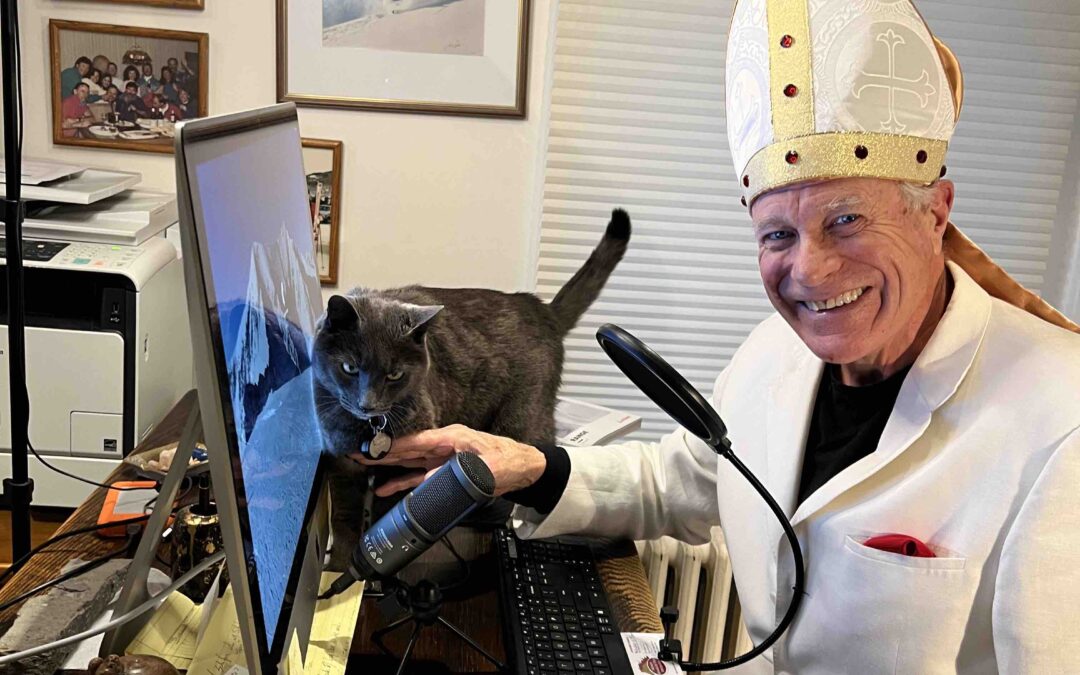
I have to occasionally acknowledge the limitations of being but one man and a gray cat, whose normally indifferent work habits have been further hampered of late by a gimpy hamstring. He is not above expressing his displeasure at being kept housebound. I have to sign off now and cauterize the various punctures and incisions from my most recent attempts to restore order to my desk.

Related Articles
Just How Strange Will the 21/22 Ski Market Be?
To (temporarily) kowtow to the cult of brevity, the short answer is, “not very.”
To elaborate, most major ski brands didn’t derail the introduction of new products that were in the works well before the pandemic dropped the hammer. There’s a rhythm to the product renewal cycle that shifts the spotlight every year to a different model family within any brand’s global collection; that rhythm was largely respected despite the unique obstacles imposed on the process this year. If most of the models appearing in 21/22 catalogs seem similar to what was offered this year, it’s because this is how the line renewal machinery ordinarily operates.
What’s difficult to judge from outside the R&D pipeline is what we’re not seeing. That is, were there more new models or upgrades to existing star products ready to launch that were put on hold to avoid overloading a potentially weakened distribution network? Possibly; what might have been a planned six-model launch may have been trimmed to three or four, for example.
Happily, there’s no real downside to this scenario for the prospective ski buyer. All essential model family refreshing and line extensions will unfold as forecast. If you haven’t bought a ski in three or four years – I believe the average span between new ski purchases is over seven – the entire universe of Alpine skis is new to you. You may spot some names you recognize, but the skis that bear the name will almost assuredly be different.
“How Is It in The Bumps?”
This question is one of the last objections a ski buyer tosses into the flow of the sale just as the salesperson has guided it to the brink of consummation. To keep the impending close on course, the suave salesperson will hedge the issue with some bland reassurance without raising the obvious retort, that no ski can overcome all the many and curious ills that plague the untalented mogul skier.
A great skier can manage bumps no matter what ski he or she is on. That doesn’t mean experts don’t have favorite skis for this spine-rattling condition, but they don’t need to change skis just because they encounter a bump field. They’ll manage, and chances are anyone watching them won’t be able to tell if the ski is helping, hurting or just along for the ride.
To get the subject out of the way, there are such things as mogul skis, but they’re made for competitors, not your everyday, all-terrain skier. Their tiny (61mm-66mm) waists and svelte sidecuts were common 25 years ago, but they’re as rare as bacon at a bar mitzvah today. Unless you’re planning to compete, there’s no reason for you to fish in this pond.
The Savvy Shopper: How to Buy Skis
Let’s begin with a recap of the fundamentals.
Realskiers’ model selection methodology starts by dividing the Alpine ski market into seven categories, using waist width as the organizing principle for three excellent reasons:
1. This dimension is the single best indicator of the ski’s capabilities.
2. Waist width is a hard number, not a fuzzy concept like skier type.
3. Suppliers product lines align with this method, creating models in every category according a coherent pricing logic.
