


We skiers are a resilient lot.
We have to be. The sport that feels embedded in the most elemental fibers of our being requires winter. I realize that last statement isn’t entirely true, but anyone who mistakes indoor skiing or sliding on sand or grass or nylon filaments for the real deal is in a deep state of denial. The essence of skiing is inseparable from mountains and snow, bringing powerful forces to bear on any and all who dare to brave both.
One of skiing’s baked-in ironies is that the skiing is best when you can’t get to it. The same storms that dump their abundant goodness on the mountains also visit all the roads that lead there, often rendering any attempt at access an extended exercise in impatience.
Then there are days like last Saturday, when a prophesized atmospheric river flowed across northern California like an inland tsunami. I realize there are exotic locales, like New England, where rain and snow often move in tandem, with the rain frequently arriving second, so as to obliterate whatever snow – and hope – that might have preceded it.
But in this instance, the rains came first, and they burst open with a Biblical vengeance, saturating the forlorn, dormant ground in no time. I awoke in Reno on the last day of 2022 to discover that I now was the proprietor of small lakeside community that was taking shape in my basement. Water was sluicing down walls and cascading from the corners of shelving. My liquid assets were swelling around my feet faster than tattered towels could absorb them. To take my mind off my hopeless predicament, I pondered how I could pull off a real estate boondoggle such as, “Lago di Hoginini: buy your Tuscan-styled lot now, while it’s still above water!”
Eventually, a good friend, a couple of wet vacs and a change in the weather caused the waters of Lago di Hoginini to recede to pre-flood levels. But while we were celebrating this triumph over adversity, silver-dollar-size snowflakes were accumulating faster than IHOP can make flapjacks. Plunging temperatures then froze the whole kit and kaboodle into a solid mass with the molecular weight of molybdenum.
It was a bad night to be an old tree. The weight of the frozen-stiff snow dropped aged limbs below their threshold of resilience, snapping off 20-foot long branches like dried kindling. Rose bushes that had survived pestilence and drought since FDR’s first term lost major limbs overnight. An old peach tree right outside our kitchen window from which Oscar Wilde (the cat, not the 19th-century British wit) could jump to the sill was leveled when a massive sheet of sodden snow slid off our steeply pitched metal roof with enough momentum to uproot it. Its fall caved in the back of a metal chaise longue like it was a soggy Pringle.
In a word, I was stymied. Skiing would have to wait.
The Great Chain of Being
If you were reading this Revelation – or listening to it in podcast form – in Elizabethan times, you might have believed in the Great Chain of Being worldview, that the orbits of Man and Nature are so intertwined that disruptions in one induces tumult in the other. I’m dusting off the concept here as I feel the paroxysm that Nature recently unleashed locally is perhaps a harbinger of change across the ski landscape.
How and where skis are sold, and how information about skis is presented and disseminated – once well-established conduits – are evolving with every passing season. One reason I continue to toil in these vineyards is because the specialty ski shop – home to the world’s best bootfitters – is an endangered species. If we lose the ability to accurately fit the skier, the gulf between the sport’s elite and the public – already a giant rift – will be complete. The sport we love will become an activity, like pickleball or cornhole. So, I want to support the shops that continue to make skiing more than just “accessible;” they help make it transformative.
While my tone might come off as “erudite curmudgeon,” I see my role as more cold-eyed realist than over-wrought alarmist. Just about every ski brand you’ve ever heard of – and all of the ones you haven’t, of which there are legions – is working overtime to build their direct-to-consumer channel. It would be poor corporate governance not to. So, this behavior is here to stay.
Meanwhile, the new product renewal machinery marches on. Today, shops in this region will get their first gander at the 23/24 model line-up, and on-snow demos will follow in due course. The mechanics of the sell-in cycle will hold together for at least another season. But there’s little doubt that further changes are more likely than a stable status quo.

Related Articles
Just How Strange Will the 21/22 Ski Market Be?
To (temporarily) kowtow to the cult of brevity, the short answer is, “not very.”
To elaborate, most major ski brands didn’t derail the introduction of new products that were in the works well before the pandemic dropped the hammer. There’s a rhythm to the product renewal cycle that shifts the spotlight every year to a different model family within any brand’s global collection; that rhythm was largely respected despite the unique obstacles imposed on the process this year. If most of the models appearing in 21/22 catalogs seem similar to what was offered this year, it’s because this is how the line renewal machinery ordinarily operates.
What’s difficult to judge from outside the R&D pipeline is what we’re not seeing. That is, were there more new models or upgrades to existing star products ready to launch that were put on hold to avoid overloading a potentially weakened distribution network? Possibly; what might have been a planned six-model launch may have been trimmed to three or four, for example.
Happily, there’s no real downside to this scenario for the prospective ski buyer. All essential model family refreshing and line extensions will unfold as forecast. If you haven’t bought a ski in three or four years – I believe the average span between new ski purchases is over seven – the entire universe of Alpine skis is new to you. You may spot some names you recognize, but the skis that bear the name will almost assuredly be different.
“How Is It in The Bumps?”
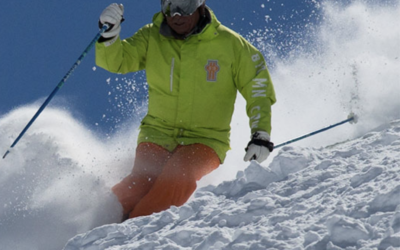
This question is one of the last objections a ski buyer tosses into the flow of the sale just as the salesperson has guided it to the brink of consummation. To keep the impending close on course, the suave salesperson will hedge the issue with some bland reassurance without raising the obvious retort, that no ski can overcome all the many and curious ills that plague the untalented mogul skier.
A great skier can manage bumps no matter what ski he or she is on. That doesn’t mean experts don’t have favorite skis for this spine-rattling condition, but they don’t need to change skis just because they encounter a bump field. They’ll manage, and chances are anyone watching them won’t be able to tell if the ski is helping, hurting or just along for the ride.
To get the subject out of the way, there are such things as mogul skis, but they’re made for competitors, not your everyday, all-terrain skier. Their tiny (61mm-66mm) waists and svelte sidecuts were common 25 years ago, but they’re as rare as bacon at a bar mitzvah today. Unless you’re planning to compete, there’s no reason for you to fish in this pond.
The Savvy Shopper: How to Buy Skis
Let’s begin with a recap of the fundamentals.
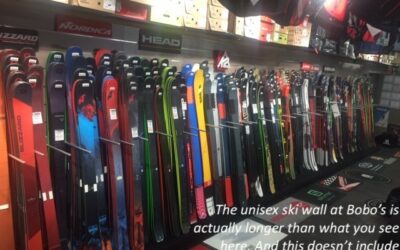
Realskiers’ model selection methodology starts by dividing the Alpine ski market into seven categories, using waist width as the organizing principle for three excellent reasons:
1. This dimension is the single best indicator of the ski’s capabilities.
2. Waist width is a hard number, not a fuzzy concept like skier type.
3. Suppliers product lines align with this method, creating models in every category according a coherent pricing logic.
