
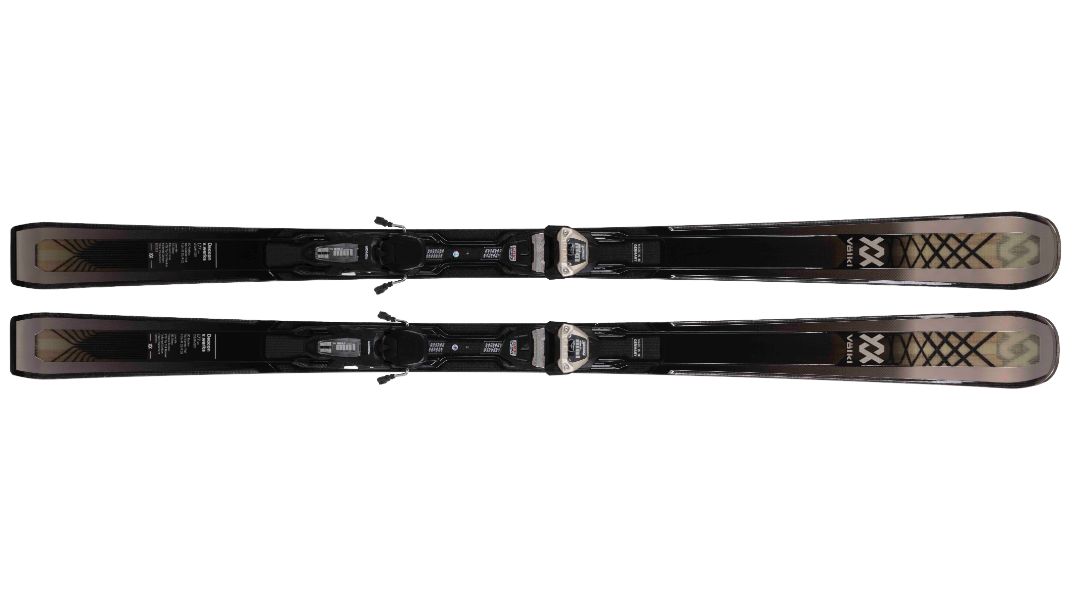
2021 Volkl Deacon V.Werks
1

Ski Stats
Sidecut 132/84/115
Radius 21m/15m/24m @ 177cm
Lengths 167,172,177,182
Weight TK
MSRP $1400
Power Score:
Finesse Score:
3

1

0
All carving skis are judged by how well they maintain edge connection on hard snow. Classically, the key to keeping a ski quiet all along its edge was to ladle on the Titanal, a proven method that achieves its damping objective in part by its mass. As a leader in lightweight design, V.Werks instead turned to its wheelhouse material, carbon, to make a damp, non-metal ski that would be light and responsive. Several factors work together to make the Deacon V.Werks easy to steer into a tight-radius turn without a lot of encouragement from the pilot. The cambered center section of its 3D Radius Sidecut is slalom-turn tight (14m@172cm); all the skier has to do to activate it is raise the edge to a high angle, a normal move for anyone who knows how to carve. To make it easier to depress into a deep carve, the abbreviated camber line underfoot is fairly shallow and soft. The tip and tail rockers are long and gradual so the long-radius zones at front and rear don’t interfere with the ski’s quickness edge to edge. The absence of metal and low elevation of the Marker system give the Deacon V.Werks a clarity of snow feel and lively energy that’s relatively rare among elite carvers. In short, V.Werks hit its target: the Deacon is a high-energy carver that’s simplicity itself to steer for skiers with the requisite skills.