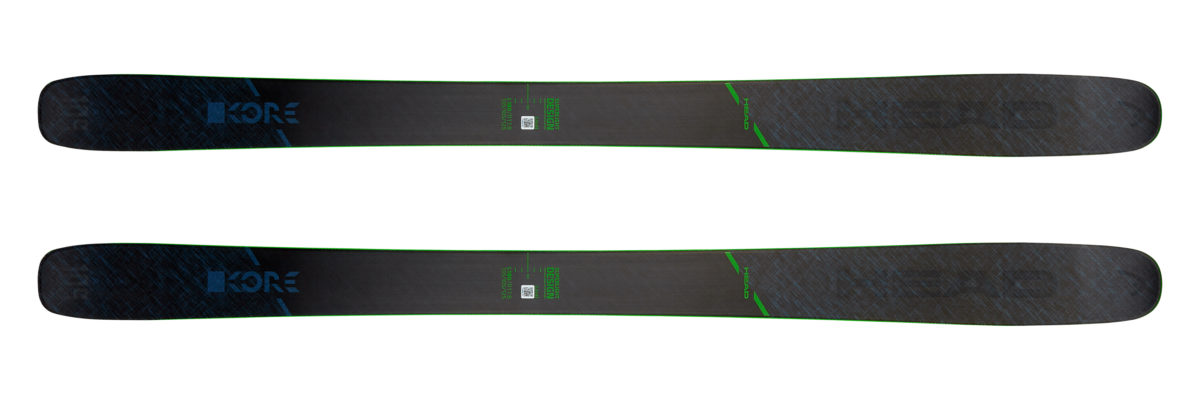
2020 Head Kore 105
1

Ski Stats
Sidecut 135/105/125
Radius 17.8m @ 180cm
Lengths 162,171,180,189
Weight 1755g @ 180cm
MSRP $875
Power Score: 8.30
Finesse Score: 8.27
3

0
1

The Head Kore105 is a very clever combination of some Old School principles, a few features that are de facto standards in the Big Mountain genre and technology that is on the cutting edge of ski design. Head is the only ski maker with a license to use Graphene, carbon in a one-atom thick matrix, which allows its engineers to stiffen or soften flex with minimal affect on mass. To maintain this weight advantage, the heaviest component in the core is a slice of poplar next to the sidewall; the rest of it is a synthetic honeycomb called Koroyd and a quotient of Karuba, an ultralight wood commonly found in Alpine Touring skis. The Kore 105 gets its power and energy from the carbon, fiberglass and Graphene that are laminated around this exotic core. To further trim grams, the topsheet is a cap made from polyester fleece, another dampening agent that’s only downside is it’s difficult to decorate, which is why all the Kores look murdered-out. This recitation of low-mass components makes it sound as though the Kore’s only selling feature is its lightweight chassis. There’s no question that the Kore design is laser-focused on keeping the ski light, but if that were its only accomplishment it wouldn’t be such a big deal. What makes the Kore construction remarkable is that it’s light but never wimpy. Once you ski it for a few runs you forget about the lightweight and just ski as you would normally, only with less labor and fatigue.
Aspen Ski & Board Company
Footloose Sports
Granite Chief Ski & Mountain Shop
The City Garage