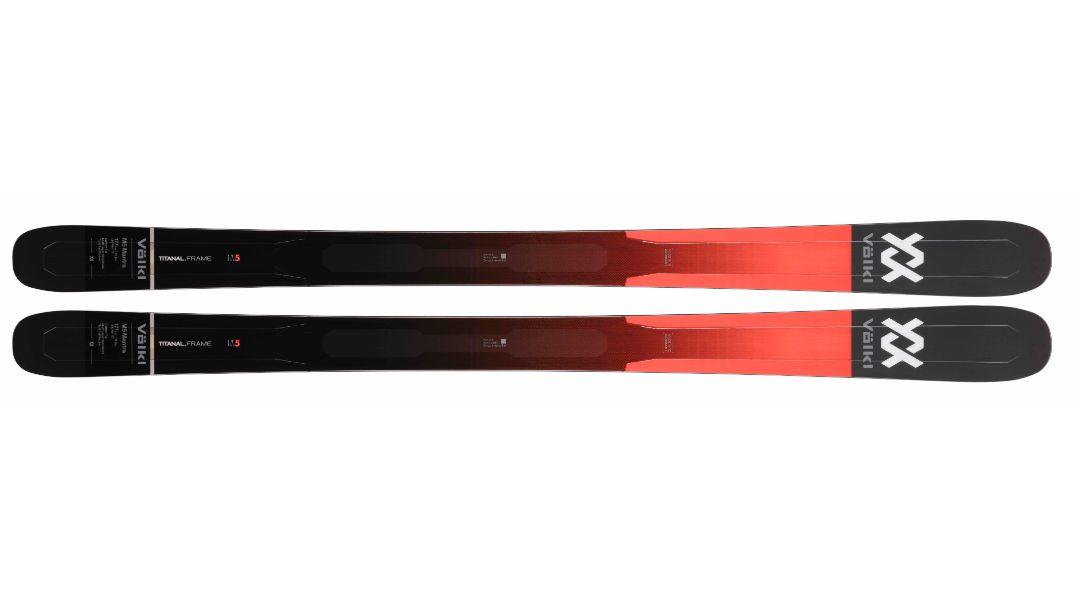
2021 Volkl M5 Mantra
1

Ski Stats

Sidecut 134/96/117
Radius 19.8m @ 177cm
Lengths 170,177,184,191
Weight 2030g @ 177cm
MSRP $825
Power Score:

Finesse Score:

3

0
0
Back in the day, liveliness was a common trait among performance skis. With the advent of shaped skis, advanced technique involved maintaining snow contact through the end of the arc. Popping off the snow became a faux pas, rockered tips reared their ugly heads and camber lines flattened out like deflated tires. By freeing up the fiberglass in its belly to compress, Völkl’s M5 Mantra creates the energy to recoil off the edge and fire the skier through the turn transition. It’s expert skiing as it used to be, before it became popular to make off-trail skis that were built more for skidding than carving. The M5 Mantra is the antidote to the smeary ski. It’s not a ski for floating over fluffy drifts of powder. Instead, it dives into pow and blows it up from the bottom, using the energy out of the turn to bring the ski up to the surface like a dolphin. No other ski in the genre is as firmly committed to carving through thick and thin as the M5. For the skier with established carving skills looking for a ski unintimidated by rough-and-tumble terrain, the revitalized M5 Mantra is your kind of board. The M5 was focused from its conception to serve the needs and meet the expectations of experts, which is why it doesn’t smear as readily as the rest of the AMW contingent.

When the Völkl M5 Mantra appeared two years ago, it was received like an answered prayer by thousands of Mantra fans who didn’t much care for the iteration that preceded it. The attributes that had been erased over time – and that the M5 Mantra restored – were a tighter waist for more accurate hard-snow steering and conventional camber underfoot, for greater grip and control over trajectory.

Völkl didn’t just resurrect an old Mantra concept; it created an entirely new recipe using the same classic components – wood, fiberglass and Titanal – that had helped put the original Mantra on the map. The new configuration is called Titanal Frame, for the difference maker is in how the top sheet of Titanal has been re-imagined.

Instead of a solid, end–to-end laminate, Völkl broke the topsheet into three pieces: a .6mm thick section in the forebody that runs around the perimeter and over the tip; a similar .6mm U-shaped part in the tail; and an independent .4 mm plate in the middle. By making it easier to bow underfoot, the skier can more readily compress the fat sheet of fiberglass right below the metal bits, loading the ski with energy and delivering another element Mantra fans had been missing: rebound.

Back in the day, liveliness was a common trait among performance skis. With the advent of shaped skis, advanced technique involved maintaining snow contact through the end of the arc. Popping off the snow became a faux pas, rockered tips reared their ugly heads and camber lines flattened out like deflated tires.

By freeing up the fiberglass in its belly to compress, the M5 Mantra creates the energy to recoil off the edge and fire the skier through the turn transition. It’s expert skiing as it used to be, before it became popular to make off-trail skis that were built more for skidding than carving.

The M5 Mantra is the antidote to the slarvy ski. It’s not a ski for floating over fluffy drifts of powder. Its mission is to dive into the pow and blow it up from the bottom, using the energy out of the turn to bring the ski up to the surface like a dolphin. No other ski in the genre is as firmly committed to carving through thick and thin as the M5.

“So happy to have camber back in the Mantra,” exults Bob Gleason, expressing a thought that formed a common thread through our results. “A smooth and snappy feeling. Carves like a blade and finished the turn with authority.” For the skier with established carving skills looking for a ski unintimidated by rough-and-tumble terrain, the revitalized M5 Mantra is your kind of board.

One comment about the M5 Mantra’s comparatively low rank on the Finesse scale: the M5 was focused from its conception to serve the needs and meet the expectations of experts. Hence the cambered baseline, the tighter waistline, the higher energy level off a pressured edge. It doesn’t smear as readily as many AMW models because it isn’t meant to. In our scoring, this shows up as a demerit, but for the technical skier this carve-centric characteristic should earn a merit badge instead.