
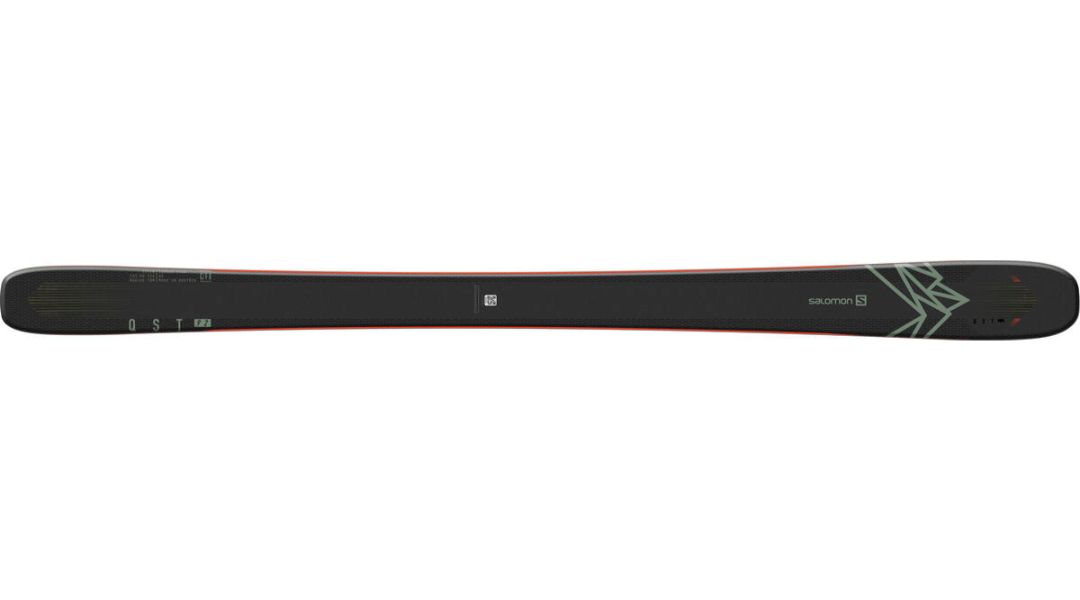
2021 Salomon QST 92
1

Ski Stats
Sidecut 128/92/111
Radius 18m @177cm
Lengths 153,161,169,177,185
Weight 1490g @ 177cm
MSRP $675
Power Score:
Finesse Score:
3

0
1

Let the record show that no ski made as giant a leap forward in 2020 as the Salomon QST 92. In its two earlier incarnations it barely met our Recommended minimum standards, barely hanging on the tail end of the Finesse ski standings. Now it resides near the top of our Finesse rankings, and the result is no fluke. The current QST has more of everything you want – edging power on trail, a better shape for off-trail, a more solid platform – and less of what you don’t want: tip chatter, indifferent grip, overall looseness. Salomon pulled off this coup by reconfiguring how it used its primary components, flax, basalt and, of course, carbon. The basalt and carbon are woven together in an end-to-end matrix, while the flax gets its own mat directly underfoot. An all-poplar core is reinforced by a patch of Titanal in the mid-section and finished with new cork inserts in the tip and tail. The cork by itself is a major contributor to the QST 92’s calmness, as it’s reputed to be 16 times more shock absorbing than the Koroyd honeycomb it replaces. What’s truly amazing is that the 2020, more torsionally rigid QST 92 comes in over 200g lighter than the 2019 version. Its strength to weight ratio has to be among the leaders, not in the AME genre, but across all categories.