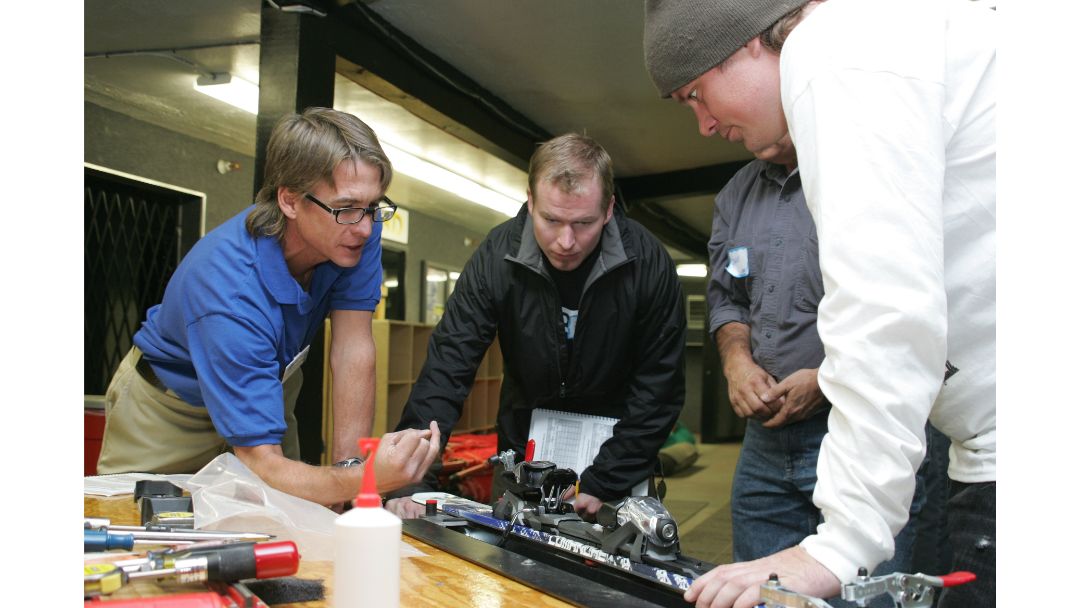
The Making of a Skier, Part X: The Mechanics & Managers Workshop Tour
When I left Salomon in the spring of 1987, my motivations could be distilled into three principal components:
• The parent company declared it was moving its Reno-based North American HQ back from whence it came. Neither I nor my family had the slightest desire to return to New England.
• I felt I was spending more energy battling factions within my own company than I was out-flanking our competition. I’d worked more or less without a break since June of 1978. My thin veneer of patience cracked.
• I wanted to write screenplays. Not that I had demonstrated any talent for creative writing or had any training in the field. I’d written reams of technical swill, brochure copy, training manuals and memos which created the illusion that I could at least write something, so why not screenplays?
Note that none of these factors involves finding a new job. At the time, I didn’t want to resume wearing the shackles of employment as they would interfere with my ludicrous screenwriting ambitions. Then the stock market went into a tailspin in October, crippling what little equity I’d managed to accrue on my minimalist salary. Oops.